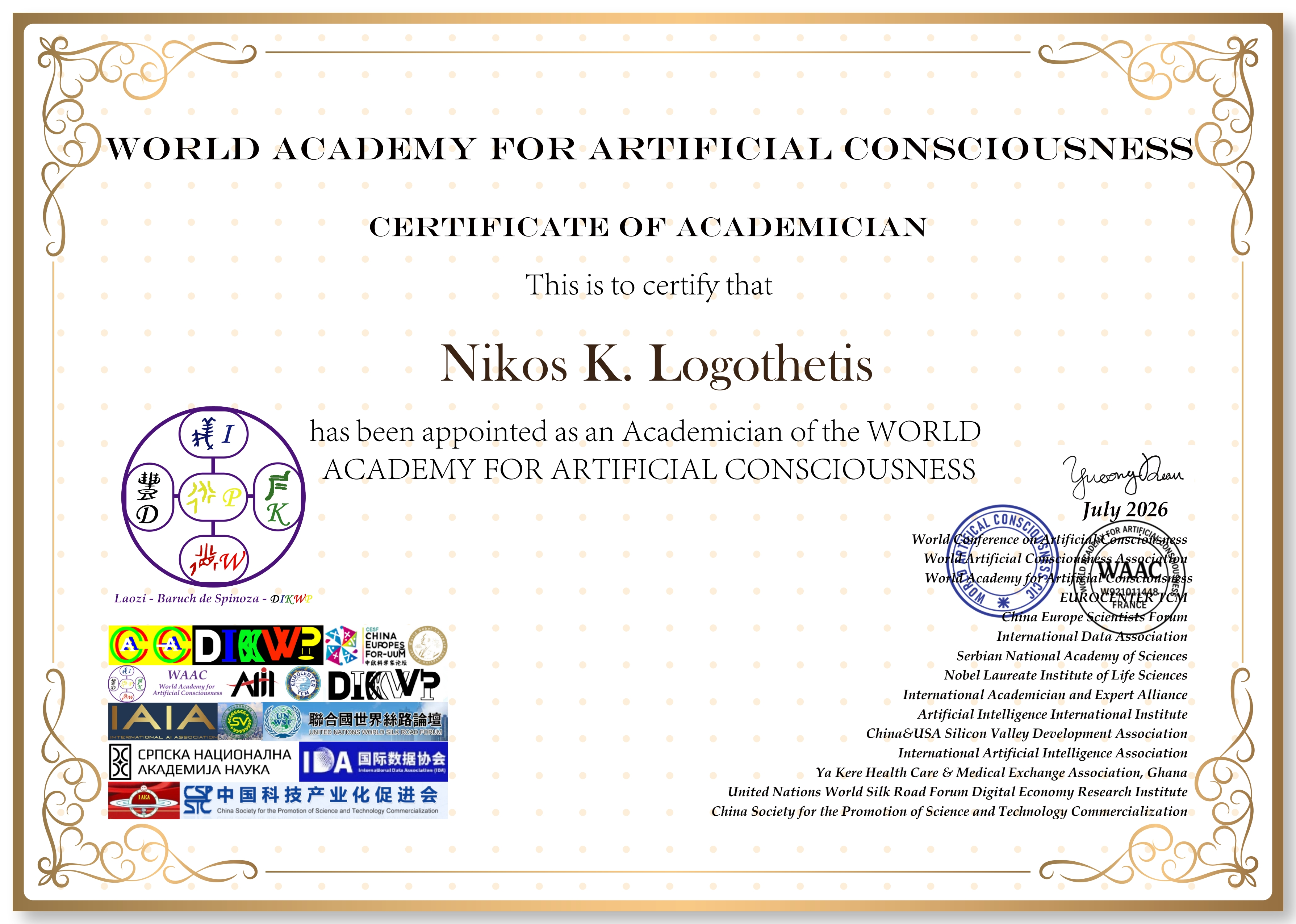
We are pleased to announce that Professor Nikos K. Logothetis, Director / Co-Director and Senior Investigator of the International Center for Primate Brain Research (ICPBR) in Shanghai, and Emeritus Director of the Max Planck Institute for Biological Cybernetics, has been elected as an Academician of the World Academy of Artificial Consciousness (WAAC), in recognition of his important contributions to systems neuroscience, primate brain research, neuroimaging, electrophysiology, visual perception, object recognition, neurovascular coupling, learning and memory, and the neural mechanisms of consciousness.
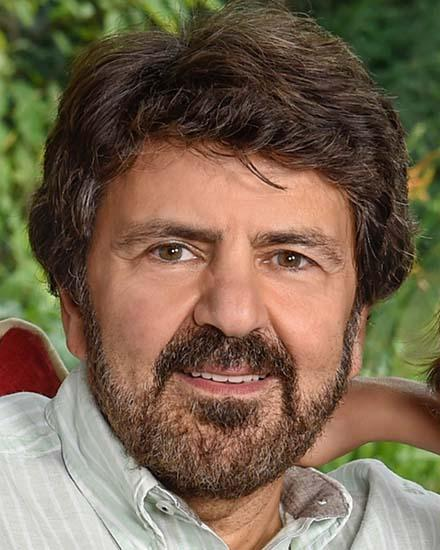
Professor Nikos K. Logothetis is an internationally influential scholar in systems neuroscience, primate cognitive neuroscience, and neuroimaging. He has long been dedicated to revealing the neural mechanisms underlying perception, attention, cognition, learning, memory, and behavior through non-human primate research, electrophysiological recording, functional magnetic resonance imaging, computational neuroscience, and multi-scale brain systems analysis. His research has not only advanced our understanding of the visual system, object recognition, coordinated activity among brain regions, and neurovascular coupling, but has also laid an important foundation for interpreting the neural basis of functional magnetic resonance imaging signals, explaining brain activity across multiple scales, and investigating complex cognitive functions. As a key academic leader of the International Center for Primate Brain Research in Shanghai, Professor Logothetis has continued to promote the development of high-level primate brain science research platforms and international collaboration, making important contributions to the advancement of brain science, cognitive science, and intelligent science in China and worldwide.
WAAC believes that the study of artificial consciousness requires not only advances in artificial intelligence, cognitive science, computational modeling, and philosophical theory, but also in-depth investigation into the neural foundations of perception, attention, memory, conscious experience, and complex behavior in the biological brain. Professor Logothetis’s work on primate brain systems, neuroimaging mechanisms, visual cognition, electrophysiological recording, and brain network activity provides important theoretical and experimental resources for perceptual modeling, brain-inspired intelligence, neural mechanism interpretation, multimodal representation of consciousness, machine cognitive system design, and the construction of consciousness-like mechanisms in artificial systems. His cross-scale and cross-method research approach offers significant inspiration for connecting biological consciousness research with artificial consciousness modeling.
In recognition of his outstanding contributions to systems neuroscience, primate brain research, neuroimaging, electrophysiology, visual cognition, neurovascular coupling, learning and memory, and the study of consciousness mechanisms, the World Academy of Artificial Consciousness has decided to confer upon Professor Nikos K. Logothetis the title of WAAC Academician.
- Global Collaboration and Academic Ecosystem
Academicians of the World Academy for Artificial Consciousness hail from institutions such as Harvard University, the Massachusetts Institute of Technology, the University of Cambridge, the University of California, the French Academy of Sciences, the University of Padua, the University of Oxford, the University of Queensland, Columbia University, and the University of Exeter. Honorary Academicians come from a wide range of countries and regions, including the United States, the United Kingdom, France, Germany, Italy, Sweden, Canada, Australia, Spain, and China. In addition, leading scientists from prominent research institutes and technology companies—such as Google, the Allen Institute for Brain Science, and ZEEKR—also participate.
- About WAAC
The World Academy for Artificial Consciousness (https://www.waac.ac/) is a global academic institution established in Paris in 2025. Its mission is to advance frontier research and international collaboration in artificial consciousness through the integration of science, technology, and philosophy. The Academy publishes open research, policy recommendations, evaluation standards, and more. The current President is Academician Yucong Duan, and the Secretary-General is Dr. Yingbo Li. The Honorary Academician List: On May 3, 2025, WAAC released its first batch of Top 100 Honorary Academicians, recognizing scholars who have made foundational or leading contributions to the theory of artificial consciousness.