2026-03-29
Keynote Speech by Turing Award Laureate Jack J. Dongarra at the 3rd World Conference on Artificial Consciousness
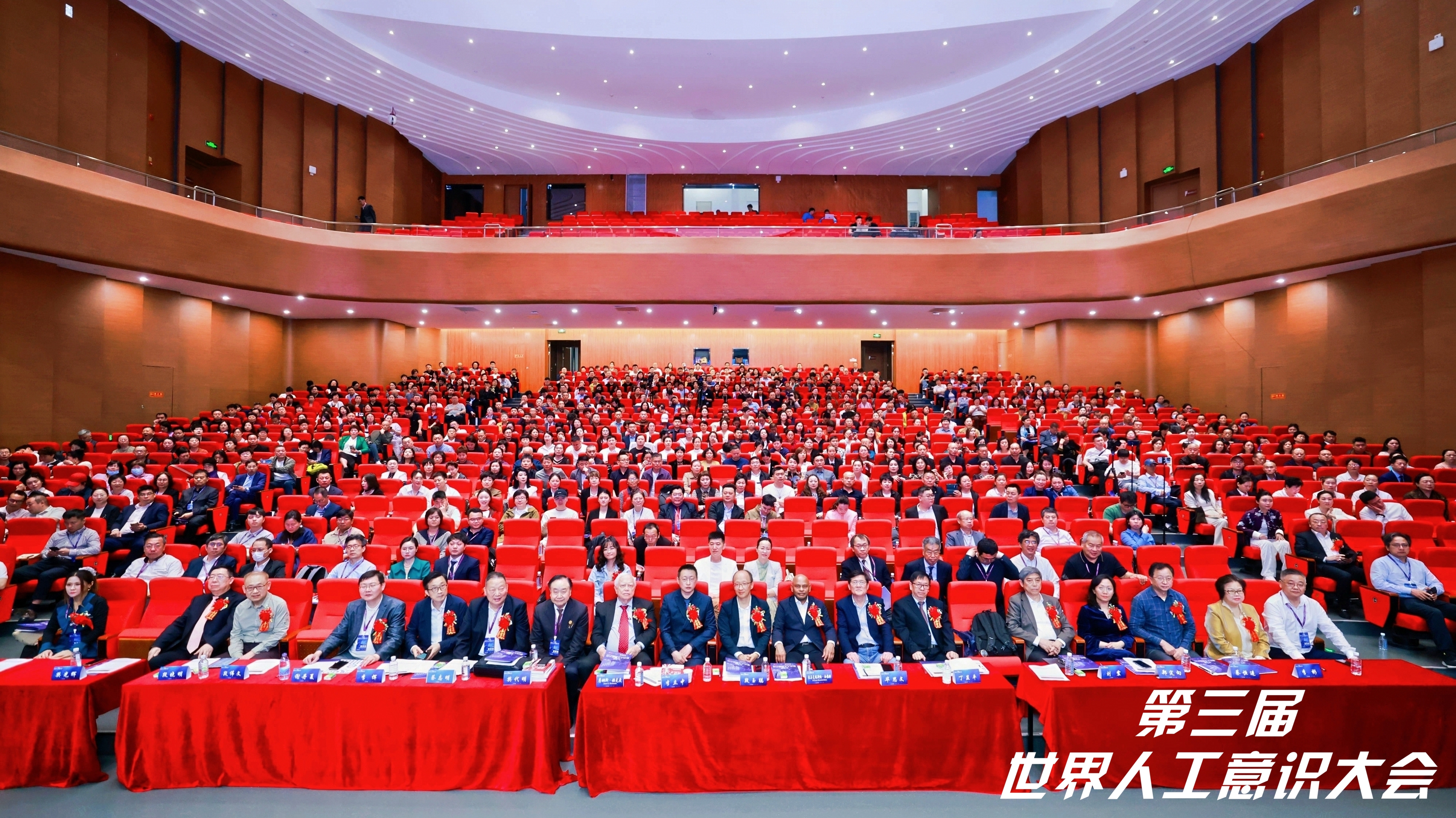
At the 3rd World Conference on Artificial Consciousness, held in Shenzhen on March 21, 2026, the World Academy of Artificial Consciousness presented certificates to Professor James J. Heckman, recipient of the 2000 Nobel Prize in Economic Sciences, and Professor Seeram Ramakrishna, Foreign Member of the Chinese Academy of Engineering. The conference was themed "Fundamental Theories and Practical Exploration of Artificial Consciousness, and Artificial Intelligence Empowering Proactive Health Medicine."
The following is the keynote speech manuscript delivered by Turing Award laureate Jack J. Dongarra for the 3rd World Conference on Artificial Consciousness. In this message, Dongarra reflects on artificial consciousness as a frontier problem spanning computer science, neuroscience, philosophy, cognitive science, and artificial intelligence.
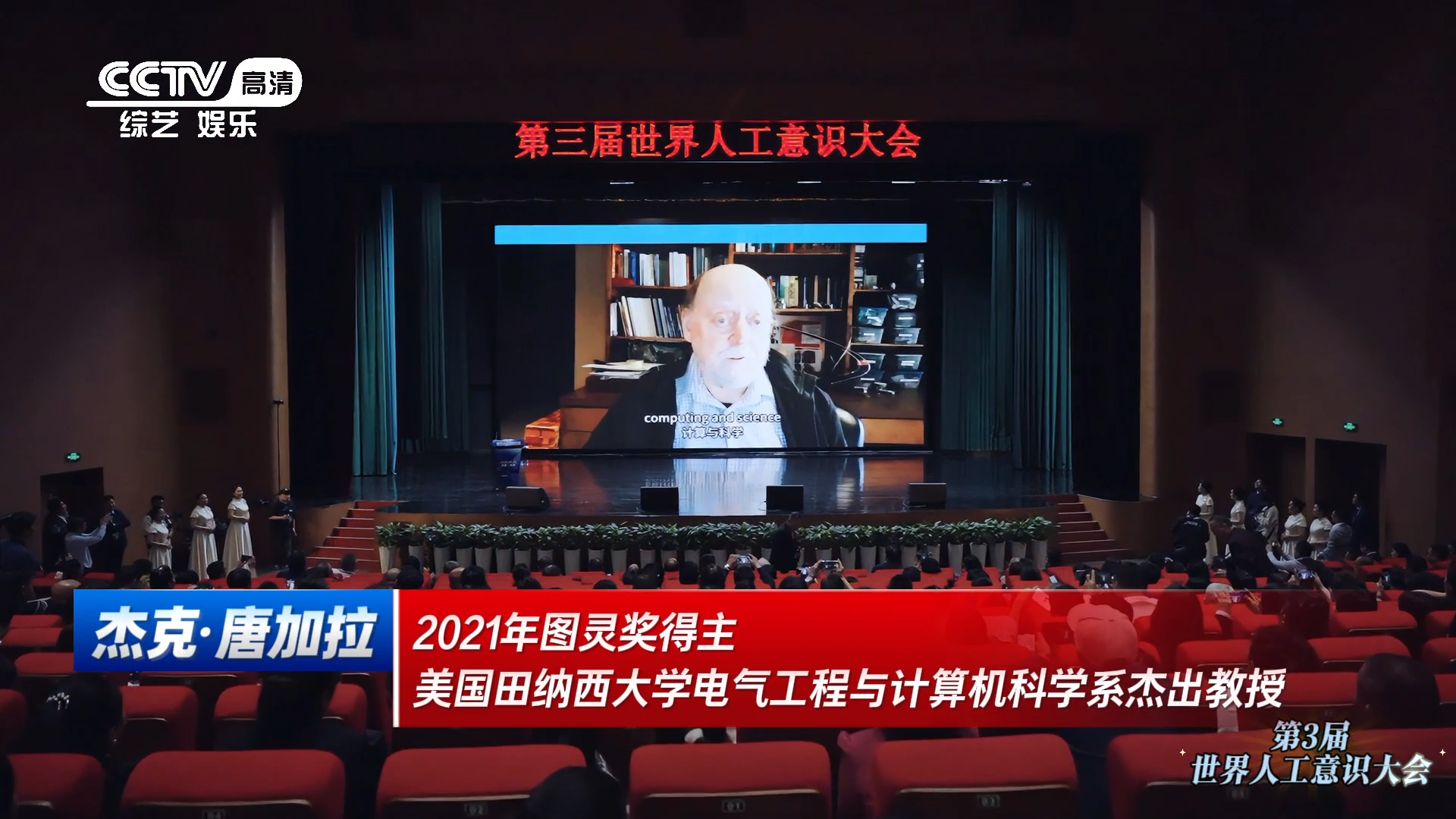
Good morning, and thank you for the invitation to share a few words with you today. I regret that I cannot be there in person, but I am very pleased to send my greetings to the organizers and participants of the 3rd World Conference on Artificial Consciousness.
Artificial consciousness is one of the most fascinating and challenging frontiers in computing and science. It lies at the intersection of many disciplines, including computer science, neuroscience, philosophy, cognitive science, and artificial intelligence. Questions about awareness, perception, and the nature of intelligence have occupied human thought for centuries. Today, we find ourselves at a remarkable moment, as computational systems are beginning to engage with aspects of these questions in increasingly practical ways.
From the perspective of computing, what is particularly interesting is how advances in algorithms, data, and large-scale systems are enabling entirely new forms of exploration. The growth of AI systems capable of learning, reasoning, and interacting with the world has opened discussions that were once purely philosophical. Although we are still far from understanding consciousness in a deep scientific sense, the ability to build increasingly sophisticated computational models allows us to test ideas, explore hypotheses, and better understand the mechanisms underlying intelligence itself.
At the same time, this area reminds us that progress in computing has always been about more than faster machines. It has also been about building frameworks that allow ideas to become experiments, and experiments to become knowledge. Just as numerical algorithms and scientific software have helped turn computing into an instrument of discovery, advances in AI architectures and cognitive modeling may help illuminate some of the deepest questions about mind and intelligence.
Conferences like this play an important role in that process. They bring together researchers from diverse backgrounds and encourage exactly the kind of interdisciplinary dialogue that these problems demand. Progress will likely come not from a single field, but from collaboration among many communities working together.
I would like to congratulate the organizers for creating this forum, and I would also like to thank all of you for the work you are doing. The questions you are addressing are ambitious and difficult, but they are also among the most intellectually exciting challenges of our time.
I wish you a very successful conference and many stimulating discussions. Thank you very much for your attention.