Tagged: WAAC
Professor Geraint Rees of University College London (UCL) has been elected as an academician of the World Academy for Artificial Consciousness (WAAC)
_0.jpg)
We are pleased to announce that Professor Geraint Rees, Vice-Provost of UCL, has been elected an academician of the World Academy for Artificial Consciousness (WAAC) for his foundational contributions to the neural mechanisms of conscious contents and attention, brain networks, and computational decoding.
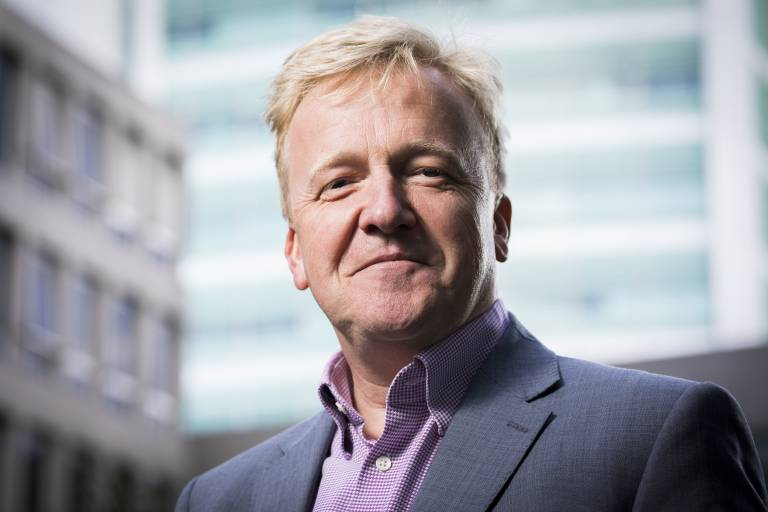
Over many years, Professor Rees has used functional imaging (fMRI) and multivoxel pattern analysis (MVPA) to systematically reveal the neural correlates of visual consciousness, while advancing both the methodology and ethical discourse surrounding “brain readout/mind decoding.” His work has laid an important foundation for data-driven characterization linking conscious representations, large-scale brain networks, and computable readouts. Beyond basic research, Professor Rees has played key roles in academic governance and the innovation ecosystem, and has spearheaded initiatives that promote cross-disciplinary translation and international partnerships at the scientific frontier.
- Global Collaboration and Academic Ecosystem
Academicians of the World Academy for Artificial Consciousness hail from institutions such as Harvard University, the Massachusetts Institute of Technology, the University of Cambridge, the University of California, the French Academy of Sciences, the University of Padua, the University of Queensland, Columbia University, and the University of Exeter. Honorary Academicians come from a wide range of countries and regions, including the United States, the United Kingdom, France, Germany, Italy, Sweden, Canada, Australia, Spain, and China. In addition, leading scientists from prominent research institutes and technology companies—such as Google, the Allen Institute for Brain Science, and ZEEKR—also participate.
- About WAAC
The World Academy for Artificial Consciousness (https://www.waac.ac/) is a global academic institution established in Paris in 2025. Its mission is to advance frontier research and international collaboration in artificial consciousness through the integration of science, technology, and philosophy. The Academy publishes open research, policy recommendations, evaluation standards, and more. The current President is Academician Yucong Duan, and the Secretary-General is Dr. Yingbo Li. The Honorary Academician List: On May 3, 2025, WAAC released its first batch of Top 100 Honorary Academicians, recognizing scholars who have made foundational or leading contributions to the theory of artificial consciousness.
Read more
Nobel laureate Professor H. Robert Horvitz has been elected as an academician of the World Academy for Artificial Consciousness (WAAC)
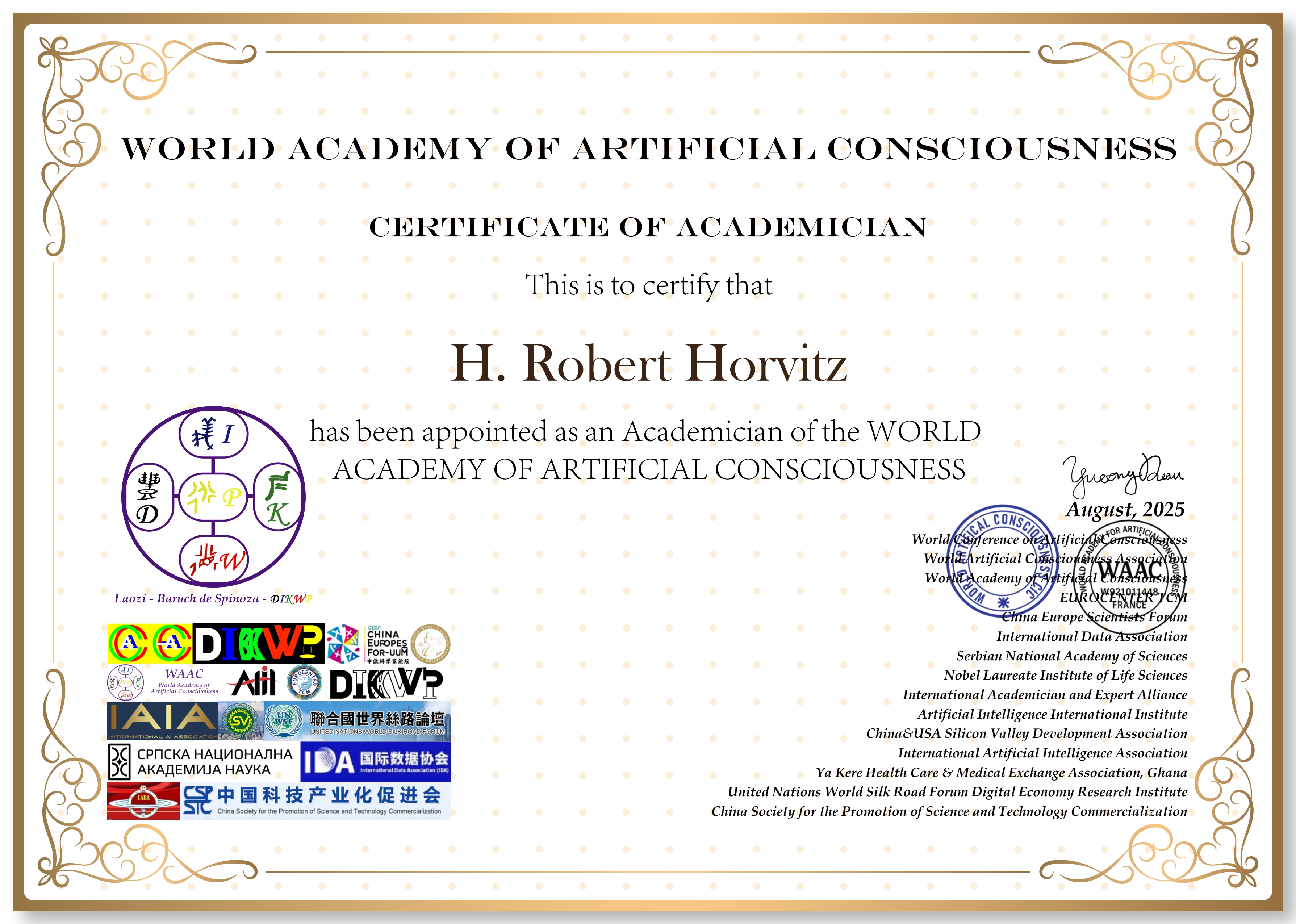
We are pleased to announce that Professor H. Robert Horvitz has been elected an academician of the World Academy for Artificial Consciousness (WAAC) for his foundational contributions to programmed cell death (apoptosis) and neural/developmental genetics in Caenorhabditis elegans (C. elegans).
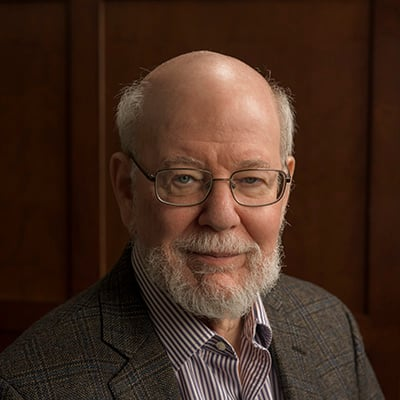
Over many years, the Horvitz laboratory used C. elegans to establish the canonical genetic pathway of programmed cell death: ced-3 and ced-4 are essential for cell death, whereas ced-9 acts anti-apoptotically; subsequent work showed that egl-1 initiates cell death by inhibiting CED-9, releasing CED-4, and thereby activating CED-3. This pathway provided the genetic blueprint for the mammalian BCL-2–APAF-1–caspase system. These discoveries not only elucidated the molecular basis of development and the sculpting of neural circuits, but also opened new avenues for research on cancer, immunity, and neurodegenerative diseases.
- Global Collaboration and Academic Ecosystem
Academicians of the World Academy for Artificial Consciousness hail from institutions such as Harvard University, the Massachusetts Institute of Technology, the University of Cambridge, the University of California, the French Academy of Sciences, the University of Padua, the University of Queensland, Columbia University, and the University of Exeter. Honorary Academicians come from a wide range of countries and regions, including the United States, the United Kingdom, France, Germany, Italy, Sweden, Canada, Australia, Spain, and China. In addition, leading scientists from prominent research institutes and technology companies—such as Google, the Allen Institute for Brain Science, and ZEEKR—also participate.
- About WAAC
The World Academy for Artificial Consciousness (https://www.waac.ac/) is a global academic institution established in Paris in 2025. Its mission is to advance frontier research and international collaboration in artificial consciousness through the integration of science, technology, and philosophy. The Academy publishes open research, policy recommendations, evaluation standards, and more. The current President is Academician Yucong Duan, and the Secretary-General is Dr. Yingbo Li. The Honorary Academician List: On May 3, 2025, WAAC released its first batch of Top 100 Honorary Academicians, recognizing scholars who have made foundational or leading contributions to the theory of artificial consciousness.
Read more
Professor Ehud Ahissar of the Weizmann Institute of Science in Israel has been elected as an academician of the World Academy of Artificial Consciousness (WAAC)
_0.jpg)
We are pleased to announce that Professor Ehud Ahissar, a professor in the Department of Neurobiology at the Weizmann Institute of Science, has been awarded the honor of being elected as an academician of the World Academy of Artificial Consciousness (WAAC) for his outstanding contributions to the fields of tactile perception, active perception mechanisms, and perceptual embodiment theory.
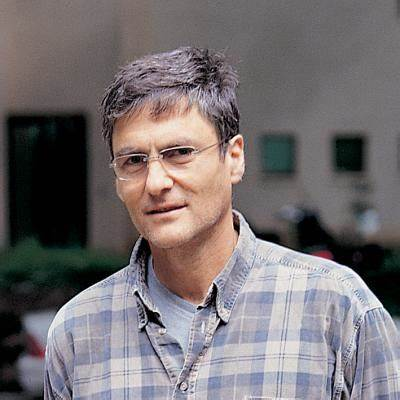
Professor Ahissar has long been dedicated to researching the closed-loop mechanisms of perception, proposing that perception is not only an internal process of the brain but is also closely related to bodily movements and interactions with the environment. He emphasizes that perception is an embodiment of the interaction between the body and the environment. His research findings are of significant importance for understanding the mechanisms of perception and the formation of consciousness.
- Global Collaboration and Academic Ecosystem
Academicians of the World Academy for Artificial Consciousness hail from institutions such as Harvard University, the Massachusetts Institute of Technology, the University of Cambridge, the University of California, the French Academy of Sciences, the University of Padua, the University of Queensland, Columbia University, and the University of Exeter. Honorary Academicians come from a wide range of countries and regions, including the United States, the United Kingdom, France, Germany, Italy, Sweden, Canada, Australia, Spain, and China. In addition, leading scientists from prominent research institutes and technology companies—such as Google, the Allen Institute for Brain Science, and ZEEKR—also participate.
- About WAAC
The World Academy for Artificial Consciousness (https://www.waac.ac/) is a global academic institution established in Paris in 2025. Its mission is to advance frontier research and international collaboration in artificial consciousness through the integration of science, technology, and philosophy. The Academy publishes open research, policy recommendations, evaluation standards, and more. The current President is Academician Yucong Duan, and the Secretary-General is Dr. Yingbo Li. The Honorary Academician List: On May 3, 2025, WAAC released its first batch of Top 100 Honorary Academicians, recognizing scholars who have made foundational or leading contributions to the theory of artificial consciousness.
Read more
Professor Dov Sagi from the Weizmann Institute of Science in Israel has been elected as an academician of the World Academy of Artificial Consciousness (WAAC).
_0.jpg)
We are pleased to announce that Professor Dov Sagi, from the Department of Neurobiology at the Weizmann Institute of Science in Israel, has been elected as an academician of the World Academy for Artificial Consciousness (WAAC) for his pioneering research in the fields of visual perception learning, consciousness thresholds, and perceptual plasticity.
Professor Sagi has long been dedicated to exploring the plasticity of the visual system, revealing how perceptual learning influences perceptual stability and conscious experience. His research shows that perceptual learning not only enhances sensitivity to visual stimuli but also affects current perceptual reports through sequence dependence, highlighting the importance of visual memory in the generalization of learning.
- Global Collaboration and Academic Ecosystem
Academicians of the World Academy for Artificial Consciousness hail from institutions such as Harvard University, the Massachusetts Institute of Technology, the University of Cambridge, the University of California, the French Academy of Sciences, the University of Padua, the University of Queensland, Columbia University, and the University of Exeter. Honorary Academicians come from a wide range of countries and regions, including the United States, the United Kingdom, France, Germany, Italy, Sweden, Canada, Australia, Spain, and China. In addition, leading scientists from prominent research institutes and technology companies—such as Google, the Allen Institute for Brain Science, and ZEEKR—also participate.
- About WAAC
The World Academy for Artificial Consciousness (https://www.waac.ac/) is a global academic institution established in Paris in 2025. Its mission is to advance frontier research and international collaboration in artificial consciousness through the integration of science, technology, and philosophy. The Academy publishes open research, policy recommendations, evaluation standards, and more. The current President is Academician Yucong Duan, and the Secretary-General is Dr. Yingbo Li. The Honorary Academician List: On May 3, 2025, WAAC released its first batch of Top 100 Honorary Academicians, recognizing scholars who have made foundational or leading contributions to the theory of artificial consciousness.
Read more
Professor Douglas Medin of Northwestern University Elected Academician of the World Academy of Artificial Consciousness (WAAC)
_0.jpg)
We are pleased to announce that, in recognition of his foundational contributions to concept and category learning, folk biology, and research on culture–cognition interactions, Professor Douglas Medin of the Department of Psychology at Northwestern University has been elected an Academician of the World Academy of Artificial Consciousness (WAAC).
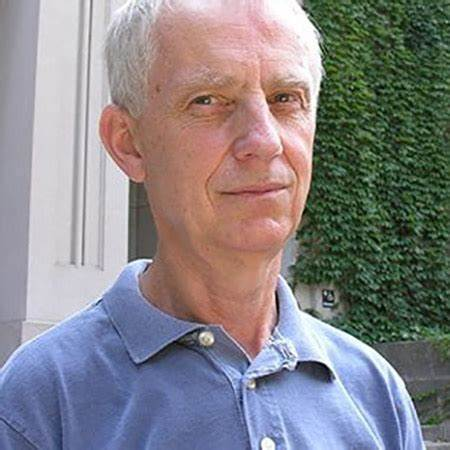
Professor Medin’s Context Theory/exemplar model reshaped scholarly understanding of human concepts and categorization: classification judgments can be driven directly by similarity to stored “instances” in memory, rather than relying solely on abstract prototypes and rules. Validated through rigorous experimental paradigms, this framework established exemplar-based learning and reasoning as a central pathway and a key baseline for subsequent work in category learning and representational modeling.
- Global Collaboration and Academic Ecosystem
Academicians of the World Academy for Artificial Consciousness hail from institutions such as Harvard University, the Massachusetts Institute of Technology, the University of Cambridge, the University of California, the French Academy of Sciences, the University of Padua, the University of Queensland, Columbia University, and the University of Exeter. Honorary Academicians come from a wide range of countries and regions, including the United States, the United Kingdom, France, Germany, Italy, Sweden, Canada, Australia, Spain, and China. In addition, leading scientists from prominent research institutes and technology companies—such as Google, the Allen Institute for Brain Science, and ZEEKR—also participate.
- About WAAC
The World Academy for Artificial Consciousness (https://www.waac.ac/) is a global academic institution established in Paris in 2025. Its mission is to advance frontier research and international collaboration in artificial consciousness through the integration of science, technology, and philosophy. The Academy publishes open research, policy recommendations, evaluation standards, and more. The current President is Academician Yucong Duan, and the Secretary-General is Dr. Yingbo Li. The Honorary Academician List: On May 3, 2025, WAAC released its first batch of Top 100 Honorary Academicians, recognizing scholars who have made foundational or leading contributions to the theory of artificial consciousness.
Read more
Professor Ellen Langer of Harvard University Elected Academician of the World Academy of Artificial Consciousness (WAAC)
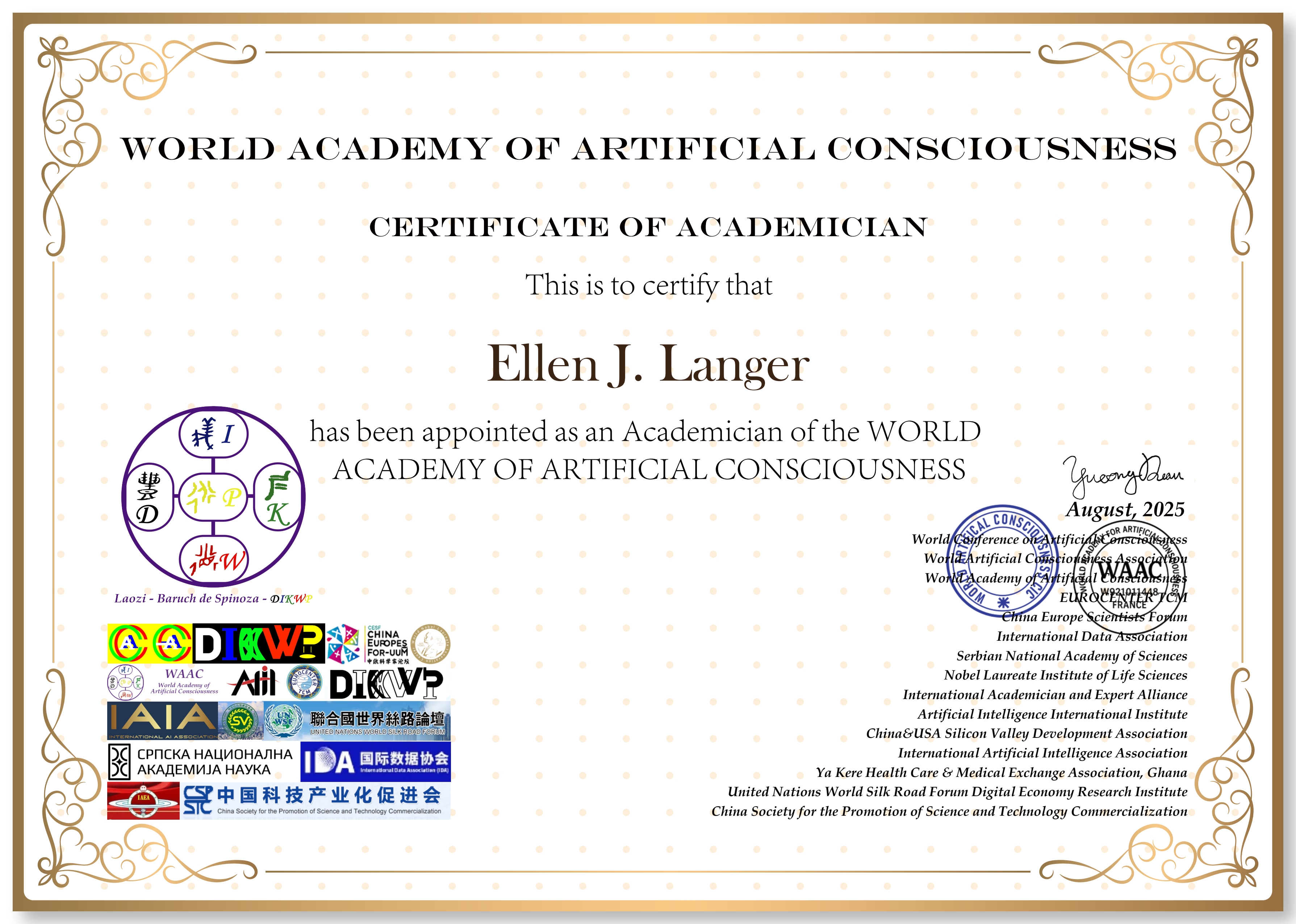
We are pleased to announce that Professor Ellen Langer of the Department of Psychology at Harvard University— a pioneer of mindfulness research—has been elected an Academician of the World Academy of Artificial Consciousness (WAAC) in recognition of her foundational contributions and cross-disciplinary impact in mindfulness centered on context and active attention (a non-meditative approach), mind–body unity, and the illusion of control.

As a Harvard psychologist, Professor Langer proposed the Langerian mindfulness framework built around “actively noticing novelty,” systematically investigated the causal pathways linking mindset with health, learning, and decision-making, and on this basis advocated a theoretical orientation of mind–body unity. Her general-audience book The Mindful Body (2023) synthesizes more than forty years of evidence, demonstrating the potential influence of mindset and contextual design on physiological indicators and the management of chronic disease.
- Global Collaboration and Academic Ecosystem
Academicians of the World Academy for Artificial Consciousness hail from institutions such as Harvard University, the Massachusetts Institute of Technology, the University of Cambridge, the University of California, the French Academy of Sciences, the University of Padua, the University of Queensland, Columbia University, and the University of Exeter. Honorary Academicians come from a wide range of countries and regions, including the United States, the United Kingdom, France, Germany, Italy, Sweden, Canada, Australia, Spain, and China. In addition, leading scientists from prominent research institutes and technology companies—such as Google, the Allen Institute for Brain Science, and ZEEKR—also participate.
- About WAAC
The World Academy for Artificial Consciousness (https://www.waac.ac/) is a global academic institution established in Paris in 2025. Its mission is to advance frontier research and international collaboration in artificial consciousness through the integration of science, technology, and philosophy. The Academy publishes open research, policy recommendations, evaluation standards, and more. The current President is Academician Yucong Duan, and the Secretary-General is Dr. Yingbo Li. The Honorary Academician List: On May 3, 2025, WAAC released its first batch of Top 100 Honorary Academicians, recognizing scholars who have made foundational or leading contributions to the theory of artificial consciousness.
Read more
Professor Diana Reiss of the City University of New York (CUNY) Elected Academician of the World Academy for Artificial Consciousness (WAAC)
_0.jpg)
We are pleased to announce that Diana Reiss—professor at the City University of New York and an animal cognition scientist—has been elected an Academician of the World Academy for Artificial Consciousness in recognition of her foundational work on dolphin mirror self-recognition, interspecies communication, and animal consciousness.

Over many years, Professor Reiss has used systematic experimental paradigms to reveal self-representation and social cognition in nonhuman animals: with collaborators, she reported in PNAS (2001) the first demonstration of mirror self-recognition (MSR) in bottlenose dolphins; subsequently documented MSR in Asian elephants in PNAS (2006); and, in PLOS ONE (2018), showed that juvenile dolphins exhibit early markers of self-awareness. These findings expand the comparative-cognition boundaries of the “self” and provide cross-species reference points for research on the origins and evolution of consciousness.
- Global Collaboration and Academic Ecosystem
Academicians of the World Academy for Artificial Consciousness hail from institutions such as Harvard University, the Massachusetts Institute of Technology, the University of Cambridge, the University of California, the French Academy of Sciences, the University of Padua, the University of Queensland, Columbia University, and the University of Exeter. Honorary Academicians come from a wide range of countries and regions, including the United States, the United Kingdom, France, Germany, Italy, Sweden, Canada, Australia, Spain, and China. In addition, leading scientists from prominent research institutes and technology companies—such as Google, the Allen Institute for Brain Science, and ZEEKR—also participate.
- About WAAC
The World Academy for Artificial Consciousness (https://www.waac.ac/) is a global academic institution established in Paris in 2025. Its mission is to advance frontier research and international collaboration in artificial consciousness through the integration of science, technology, and philosophy. The Academy publishes open research, policy recommendations, evaluation standards, and more. The current President is Academician Yucong Duan, and the Secretary-General is Dr. Yingbo Li. The Honorary Academician List: On May 3, 2025, WAAC released its first batch of Top 100 Honorary Academicians, recognizing scholars who have made foundational or leading contributions to the theory of artificial consciousness.
Read more
Professor Steven Pinker of Harvard University Elected Honorary Academician of the World Academy for Artificial Consciousness (WAAC)
_0.jpg)
We are pleased to announce that Steven Pinker—Johnstone Family Professor of Psychology at Harvard University and a renowned cognitive scientist—has been elected an Honorary Academician of the World Academy for Artificial Consciousness (WAAC), in recognition of his outstanding contributions to language, cognition, and the computational theory of mind, as well as his sustained impact on public reason and science communication.
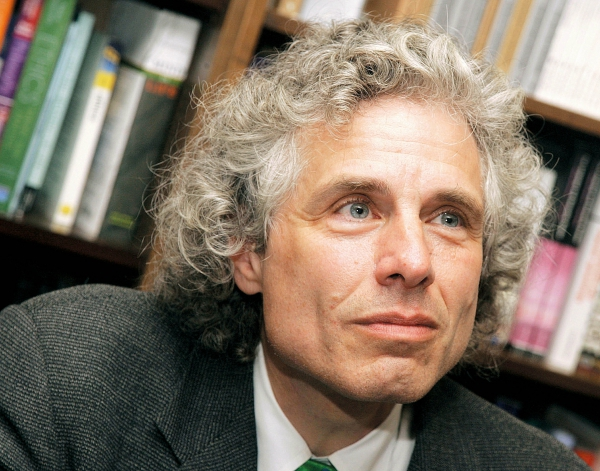
Steven Pinker is a professor in Harvard’s Department of Psychology whose research spans visual cognition, psycholinguistics, and social cognition. A leading advocate of the “computational mind” and evolutionary psychology, he has articulated the view that the mind is an information-processing system shaped by natural selection, providing a theoretical framework for understanding human cognition and building intelligent systems. His research and books on language acquisition, the structure of the mind, and rationality have exerted a lasting influence on both public discourse and academic debates about human nature and reason.
- Global Collaboration and Academic Ecosystem
The Academicians of WAAC come from universities and research institutions such as Harvard University, the Massachusetts Institute of Technology, the University of Cambridge, the University of California, the French Academy of Sciences, the University of Padua, the University of Queensland, Columbia University, and the University of Exeter, among others. Honorary Academicians represent multiple countries and regions, including the United States, the United Kingdom, France, Germany, Italy, Sweden, Canada, Australia, Spain, and China. Additionally, leading scientists from renowned research institutions and technology companies—such as Google, the Allen Institute for Brain Science, and Zeekr—are also involved.
- About WAAC
The World Academy for Artificial Consciousness (https://www.waac.ac/) is a global academic institution established in Paris in 2025. Its mission is to advance frontier research and international collaboration in artificial consciousness through the integration of science, technology, and philosophy. The Academy publishes open research, policy recommendations, evaluation standards, and more. The current President is Academician Yucong Duan, and the Secretary-General is Dr. Yingbo Li. The Honorary Academician List: On May 3, 2025, WAAC released its first batch of Top 100 Honorary Academicians, recognizing scholars who have made foundational or leading contributions to the theory of artificial consciousness.
Read more
Professor Elizabeth Loftus of the University of California Elected Academician of the World Academy for Artificial Consciousness (WAAC)
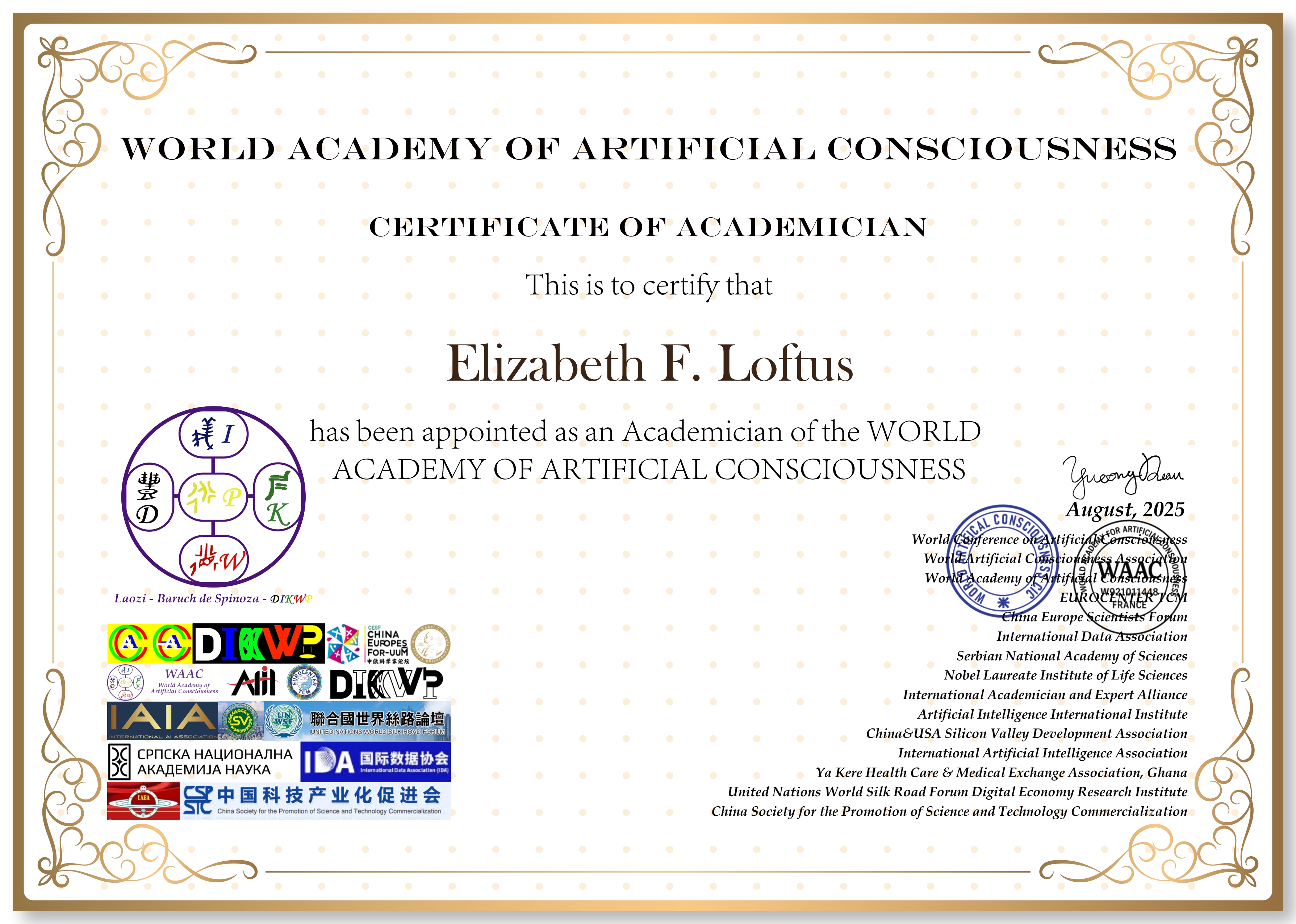
We are pleased to announce that, in recognition of her foundational contributions to human memory malleability and eyewitness testimony, Professor Elizabeth Loftus of the University of California has been elected an Academician of the World Academy for Artificial Consciousness.
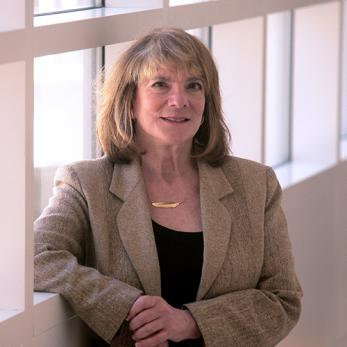
A leading figure in contemporary memory science and legal psychology, Professor Loftus has systematically revealed the misinformation effect and the plasticity of memory: post-event information and leading questions introduced after an incident can alter both the content of a person’s recollection and their confidence in it. The classic “car accident wording” experiment by Loftus and Palmer first demonstrated, with rigorous experimental paradigms, how linguistic cues reshape eyewitness recall and judgment. Over the ensuing three decades, further research delineated the conditions under which individuals are more or less susceptible to misleading information, and explored false-memory induction paradigms—such as the “lost in the mall” technique—in healthy populations, along with their ethical implications. This body of work has profoundly influenced investigative procedures, the assessment of eyewitness testimony in courts, and public policy worldwide.
- Global Collaboration and Academic Ecosystem
Academicians of the World Academy for Artificial Consciousness hail from institutions such as Harvard University, the Massachusetts Institute of Technology, the University of Cambridge, the University of California, the French Academy of Sciences, the University of Padua, the University of Queensland, Columbia University, and the University of Exeter. Honorary Academicians come from a wide range of countries and regions, including the United States, the United Kingdom, France, Germany, Italy, Sweden, Canada, Australia, Spain, and China. In addition, leading scientists from prominent research institutes and technology companies—such as Google, the Allen Institute for Brain Science, and ZEEKR—also participate.
- About WAAC
The World Academy for Artificial Consciousness (https://www.waac.ac/) is a global academic institution established in Paris in 2025. Its mission is to advance frontier research and international collaboration in artificial consciousness through the integration of science, technology, and philosophy. The Academy publishes open research, policy recommendations, evaluation standards, and more. The current President is Academician Yucong Duan, and the Secretary-General is Dr. Yingbo Li. The Honorary Academician List: On May 3, 2025, WAAC released its first batch of Top 100 Honorary Academicians, recognizing scholars who have made foundational or leading contributions to the theory of artificial consciousness.
Read more
Professor Laurent Itti from the University of Southern California has been elected as an Academician of the World Academy of Artificial Consciousness (WAAC)
_0.jpg)
We are pleased to announce that Professor Laurent Itti, a professor of Computer Science, Psychology, and Neuroscience at the University of Southern California (USC), has been elected as an academician of the World Academy for Artificial Consciousness (WAAC) for his pioneering contributions to computational models of visual saliency and attention.
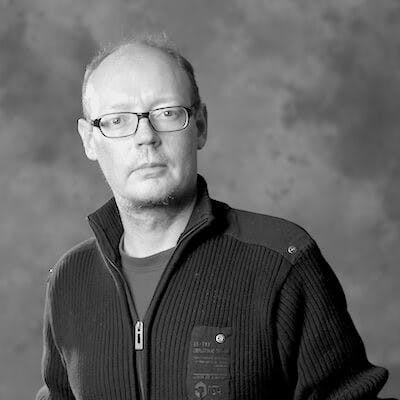
Professor Itti’s research, starting from biological visual mechanisms, proposed and developed the “saliency map” theory and bottom-up attention models, which have had a wide impact on fields such as computer vision, robotics, and human-computer interaction. His work has also advanced the exploration of computational mechanisms and interpretable pathways for “machine consciousness.”
- Global Collaboration and Academic Ecosystem
The Academicians of WAAC come from universities and research institutions such as Harvard University, the Massachusetts Institute of Technology, the University of Cambridge, the University of California, the French Academy of Sciences, the University of Padua, the University of Queensland, Columbia University, and the University of Exeter, among others. Honorary Academicians represent multiple countries and regions, including the United States, the United Kingdom, France, Germany, Italy, Sweden, Canada, Australia, Spain, and China. Additionally, leading scientists from renowned research institutions and technology companies—such as Google, the Allen Institute for Brain Science, and Zeekr—are also involved.
- About WAAC
The World Academy for Artificial Consciousness (https://www.waac.ac/) is a global academic institution established in Paris in 2025. Its mission is to advance frontier research and international collaboration in artificial consciousness through the integration of science, technology, and philosophy. The Academy publishes open research, policy recommendations, evaluation standards, and more. The current President is Academician Yucong Duan, and the Secretary-General is Dr. Yingbo Li. The Honorary Academician List: On May 3, 2025, WAAC released its first batch of Top 100 Honorary Academicians, recognizing scholars who have made foundational or leading contributions to the theory of artificial consciousness.
Read more