Tagged: WAAC
Briefing on the Organization of the 3rd World Conference on Artificial Consciousness (WCAC 2025) (2025-11-30)
- Comments
- Artificial Consciousness, WAAC, WCAC 2025, World Conference on Artificial Consciousness, WACA
The World Conference on Artificial Consciousness has been successfully held for two sessions, with over 10,000 online participants each time, generating significant international influence. From December 26–28, 2025, the 3rd World Conference on Artificial Consciousness (WCAC 2025) will be grandly held at the Northwestern Polytechnical University Taicang Campus (Suzhou, Jiangsu). This marks the first offline gathering of the conference, bringing together top experts and scholars in the global field of artificial consciousness to jointly open a new chapter in artificial consciousness research.
The conference is themed “Exploration of Fundamental Theories and Practical Applications of Artificial Consciousness.” Standing on the high ground of theory and traversing the frontiers of research, it will comprehensively present the deep integration of artificial consciousness and artificial intelligence.
Core Discussion:
The conference will systematically explore the core definition, interdisciplinary theoretical origins, and fundamental principles of artificial consciousness. It will also discuss current mainstream consciousness theories (such as Integrated Information Theory, Global Neuronal Workspace Theory, Higher-Order Theories of Consciousness, Quantum Consciousness Theory, etc.), deeply analyzing the essential connections and distinctions between artificial consciousness and human consciousness.Interaction:
The conference focuses on the interaction between artificial consciousness and artificial intelligence, exploring theoretical breakthroughs and application practices of new brain-like intelligence models, including the DIKWP (Data, Information, Knowledge, Wisdom, Purpose) cognitive framework, as well as the latest progress in embodied intelligence and brain-computer interfaces.Ethics and Governance:
With the rapid development of large models and generative AI technologies, “consciousness-like” phenomena (such as model bias, hallucinations, etc.) have triggered widespread concern. The conference will focus on strategies to eliminate bias and hallucinations, value alignment methods, and ethical governance frameworks. Meanwhile, it will discuss the construction of evaluation systems for large language models and other AI systems, from white-box analysis to black-box verification, ensuring the reliability and safety of artificial consciousness systems.Future Outlook:
It is worth emphasizing that artificial consciousness is regarded as the “brain” of artificial intelligence and is a necessary path to achieving Artificial General Intelligence (AGI). This conference pays special attention to the future outlook of the synergistic development of Artificial Consciousness and AGI, exploring the construction of virtual consciousness in the Metaverse, human-machine symbiosis and co-evolution models, and frontier issues such as AI ethics and human cognitive enhancement.
Through multidisciplinary dialogue, the conference aims to examine technological progress from a strategic height, promote the deep integration of artificial consciousness research with fields such as education, healthcare, and manufacturing, and facilitate the formation of an innovation ecosystem with a global vision.
- Latest Progress and International Response
During the preparation period, the conference has received widespread attention and support from the international academic and industrial communities. In July 2025, the Annual Meeting of the World Artificial Consciousness Association and the Preparatory Meeting for the 3rd Conference were successfully held in Haikou in a hybrid online and offline format. The annual meeting focused on core themes such as “Proactive Health,” “Artificial Consciousness Standards,” and “Global Ethical Governance,” attracting representatives from numerous international organizations and institutions, including the World Health Organization, UN-related agencies, the Serbian Academy of Sciences and Arts, the Nobel Institute of Life Sciences, the Silicon Valley China-US Cooperation Promotion Association, the Europe Center of Traditional Chinese Medicine, and the Sino-European Scientists Forum.
Dignitary Addresses:
Current and former Ministers of Health and Education from various countries, as well as academicians from Academies of Engineering and Sciences and leading experts in the AI field, attended online and offline. They delivered speeches at the preparatory opening ceremony, congratulating the conference on its success and elucidating the strategic significance of technological integration from perspectives such as the fusion of supercomputing and AI, and proactive health and artificial consciousness innovation.International Support:
Multiple Nobel Laureates, Turing Award winners, Fields Medalists, and internationally renowned scholars from over twenty countries and regions also conveyed their congratulations and support intentions through written or video messages, expressing their willingness to cooperate with the conference on frontier topics.
The international academic community consistently believes that research on artificial consciousness is gathering wisdom from multiple disciplines and requires global collaboration to address challenges. The conference preparatory group has integrated these positive signals into the preparatory work, striving to build an open cooperation platform to promote deep exchange among experts from different countries and fields.
- Conference Organization and Leadership
The 3rd World Conference on Artificial Consciousness is jointly hosted by the World Artificial Consciousness Association (WACA) and the World Academy for Artificial Consciousness (WAAC), with co-organization and support from Northwestern Polytechnical University and other units.
Organizational Structure:
To prepare for the conference, the hosting and undertaking units have established an Organizing Committee and an Academic Committee, inviting renowned domestic and foreign experts and scholars to serve as members.Leadership:
The Organizing Committee has one Chair (Conference Chair), led by Professor Binxiang Jiang and others, responsible for the overall planning and preparation of the meeting.Professional Committees:
The Organizing Committee has established multiple professional committees (such as the Computational Psychology and Cognitive Science Committee, the Proactive Health Committee, the AI Standardization and Evaluation Committee, etc.), responsible for topic setting and paper review in their respective sub-fields. Each committee is chaired by top scholars in the relevant fields to ensure the scientific nature and foresight of the topics.Secretariat:
The Conference Secretariat is located at the Northwestern Polytechnical University Taicang Campus, responsible for daily conference organization, information release, and international exchange coordination.
Through the collaborative operation of multiple institutions and disciplines, this conference will be fully guaranteed under standardized management and open exchange.
Honorary Chairs of the 3rd World Conference on Artificial Consciousness
Jingnan Liu: Academician of the Chinese Academy of Engineering
Seeram Ramakrishna: Foreign Member of the Chinese Academy of Engineering
Robert Lawrence Kuhn: Recipient of the China Reform Friendship Medal
Chair of the 3rd World Conference on Artificial Consciousness
Binxiang Jiang: Dean of the Institute of Computational Psychology, Shandong University
List of Committee Members for the 3rd World Conference on Artificial Consciousness
Adam Gazzaley: David Dolby Distinguished Professor of Neurology, Physiology, and Psychiatry at UCSF, Founder and Executive Director of Neuroscape
Ahmed Almousa: Sportklinik Hellersen
Ekpar Ilahun (Aikebaier Yilahong): Academician of the Russian Academy of Natural Sciences
Aleksey A. Gusev: National Medical Research Center for Children’s Health, Russia
Alhaji Adam Abubakari: Ya Kere HealthCare & Medical Exchange Association, Foreign Secretary-General of WACA
Andrew “Andy” Adamatzky: Professor of Unconventional Computing, University of the West of England
Andrew Ng: Professor at Stanford University, Co-founder of Coursera, Founder of Google Brain Project
Antonio Chella: Professor of Robotics at the University of Palermo, Key Scholar in Artificial Consciousness
Siwen Bi: Academician of the Russian Academy of Natural Sciences, Academician of the International Eurasian Academy of Sciences
Begench Annayev: Clinical Cardiology Center of Turkmenistan
Hengjin Cai: Academician of the International Academy of Advanced Technology and Engineering
Cathy Price: Professor of Cognitive Neuroscience at UCL, Director of the Wellcome Centre for Human Neuroimaging
Carlo Catassi: Università Politecnica delle Marche
Quanlai Cao: Director of the Institute of Digital Law Science, Changzhou University
Chang-keun Kim: Inje University, Seoul
Wantao Chen: Professor at Shanghai Jiao Tong University
Christopher A. Pissarides: Professor of Economics at LSE, Nobel Laureate in Economics
Xiangqun Chen: Nanchang University
Dana S. Scott: American Logician, Turing Award Winner
David Gamez: Senior Lecturer in Computer Science at Middlesex University, UK, Artificial Consciousness Scholar
David J. Chalmers: Professor of Philosophy and Neural Science at NYU, Renowned Philosopher of Consciousness
Qinxi Dong: Foreign Member of the Engineering Academy of Japan
Erxiang Dou: Professor at Peking University
David Bryant Mumford: Professor Emeritus of Applied Mathematics at Brown University, Fields Medalist
Ehud Ahissar: Professor, Department of Brain Sciences, Weizmann Institute of Science, Israel; Academician of WAAC
Yucong Duan: President of the World Academy for Artificial Consciousness
Ezequiel Morsella: Professor of Neuroscience, San Francisco State University
Guanghui Fan: Professor at Shenzhen University, Co-Chair of the Proactive Health Committee of WACA
Kaixi Fan: Professor at China Academy of Art
Huailiang Feng: Foreign Academician of the National Academy of Engineering Sciences of Ukraine
Yu Feng: President of Guangming Traditional Chinese Medicine Hospital, Pudong New Area, Shanghai
Yuanhui Fu: Corresponding Academician of the International Academy of Ecology and Life Protection Sciences (UN)
Fuad Hajiyev: ADA University, Azerbaijan
Qiang Gao: Academician of the European Academy of Natural Sciences
Gerwin Schalk: Professor at Fudan University, Expert in BCI and Applied Neurotechnology
Yuansheng Guo: Deputy Director of the Jiusan Society Central Science and Technology Committee
Zhendong Guo: Hainan University
Yigang He: Professor at Wuhan University, Academician of the European Academy of Natural Sciences
Helen Toner: Executive Director of the Center for Security and Emerging Technology at Georgetown University, Expert in AI Policy
Hien D. Nguyen: Professor at Vietnam National University
Shuaishuai Huang: World Artificial Consciousness Association
Huw Price: Former Bertrand Russell Professor of Philosophy at Cambridge, Expert in AI Risk
Fuyong Jiao: Academician of the European Academy of Natural Sciences, Co-Chair of the Proactive Health Committee of WACA
Jan Hovorka: Europe Center of Traditional Chinese Medicine, Czech Republic
Weidong Ji: Distinguished Professor (“Changjiang Scholar”) at Shanghai Jiao Tong University
Jamoliddin Abdullozoda: Minister of Health and Social Protection of Tajikistan
Guohui Jiang: Foreign Academician of the Russian Academy of Natural Sciences
Linhua Jiang: Foreign Academician of the Ukrainian Academy of Engineering Sciences
James Ong: Founder and Managing Director, Artificial Intelligence International Institute (AIII), Singapore
Licheng Jiao: Member of the Academia Europaea
Julia B. Hirschberg: Professor of Computer Science at Columbia University, Member of NAE and AAAS
Xian Jin: Director of the Expert Think Tank, Shanghai Association of Chief Engineers
Anjun Jin: Academician of the Russian Academy of Natural Sciences
Karl J. Friston: Professor at UCL, Authority on Theoretical Neuroscience and Brain Imaging
Hui Li: Professor at Peking University, Academician of the National Academy of Artificial Intelligence (USA)
Le Hong Nhung: Vietnam National Children’s Hospital
Chunguo Li: Professor at Southeast University, Fellow of IET, Fellow of China Institute of Communications
Hengwei Li: Professor at Zhejiang University
Hongjun Li: Capital Medical University, Academician of the Russian Academy of Natural Sciences, Co-Chair of the Proactive Health Committee of WACA
Laziz Niyazov: Bukhara State Medical Institute
Lizhong Li: Academician of the Social Sciences and Humanities Research Council of Canada (Reference check required for exact academy name, translated literally as Canadian Academy of Social Sciences)
Yingbo Li: Secretary-General of the World Academy for Artificial Consciousness, CTO of Publicis Groupe Billimd.com, France
Yueen Li: Academician of the Russian Academy of Sciences
Hongjian Liu: President of the Innovative Technology Industrialization Research Institute, China-US Silicon Valley Development Promotion Association
Larissa Gorbach: Republic Scientific and Practical Center “Mother and Child”, Belarus
Lifang Liu: Wuhan Institute of Technology
Shiping Liu: Academician of the World Academy of Productivity Science
Wei Liu: Director of the HCI and Cognition Lab, Beijing University of Posts and Telecommunications
Xuan Liu: International Alliance of Academicians and Experts
Yongmou Liu: Professor at Renmin University of China
Zhen Liu: Foreign Member of the Engineering Academy of Japan
May-Britt Moser: Professor of Neuroscience at NTNU, Nobel Laureate in Physiology or Medicine
Yingtian Mei: Secretary-General (China) of the World Artificial Consciousness Association
Nazarzoda Faridun: Minister of Health of Tajikistan
Haixi Ni: Wuhan University of Technology
Huansheng Ning: Academician of the Academy of Engineering in Developed Countries (Reference check required for exact title)
Peter Bentley: Honorary Professor at UCL, Expert in Evolutionary Computing and Artificial Life
Yuansheng Qi: Academician of the Academy of Engineering and Technology of the Developing World, Academician of the Pakistan Academy of Engineering
Rahim Firouzi Bostanabad: Qom University of Medical Sciences
Ram Hari Chapagain: National Academy of Medical Sciences, Nepal
Rattan Lal: Professor at Ohio State University, Renowned Soil Scientist, 2020 World Food Prize Laureate
Roi Cohen Kadosh: Professor of Cognitive Neuroscience at the University of Surrey
Sajid Anwar: Director of the Institute of Management Sciences, Peshawar, Pakistan
Senthil Arun Kumar: Parul University
Delong Shang: Researcher, Institute of Microelectronics, Chinese Academy of Sciences
Yongduan Song: Foreign Member of the Chinese Academy of Engineering
Stephen I. Ternyik: Scholar, The Comenius Project
Xianghui Sun: President of the International Society for Algorithms and Computing Power
Xiaodong Tan: Professor at Hainan University
Thomas C. Südhof: Professor of Molecular and Cellular Physiology at Stanford University, Nobel Laureate in Physiology or Medicine
Tungalag Osgonbaatar: Mongolian Pediatric Association
Vesna Stojanovic: Pediatric Nephrology Society of Serbia
Chunhui Wang: Professor at Zhejiang University, Chief Data Officer of the World Academy for Artificial Consciousness
Włodzisław Duch: Professor at the Department of Philosophy and Social Sciences, Nicolaus Copernicus University in Toruń, Fellow of INNS, Former President of ENNS, Academician of WAAC
Huaping Wang: Professor at Sun Yat-sen University
Wenjie Huang: University of Manchester
He Wang: Academician of the International Academy of Ecology and Life Protection Sciences (UN)
Desheng Wu: Member of the Academia Europaea
Qinghua Xia: Foreign Academician of the National Academy of Engineering Sciences of Ukraine
Li Xiao: Researcher at Beijing University of Posts and Telecommunications
Danxia Xie: Tenured Associate Professor, Institute of Economics, School of Social Sciences, Tsinghua University
Zhendong Xie: Academician of the International Academy of Advanced Technology and Engineering, President of Guangdong Smart Transportation Association
Momiao Xiong: Tenured Professor, Graduate School of UTHealth, University of Texas
Hejun Xu: First Executive Member of the Computational Law Branch, China Computer Federation
Xiaojun Yan: Academician of the Russian Academy of Engineering
Yuval Noah Harari: Professor, Department of History, Hebrew University of Jerusalem, Renowned Historian, Author of Sapiens: A Brief History of Humankind
Jin Yu: Professor at Guangzhou University of Chinese Medicine
Lei Yu: Inner Mongolia University
Jinyun Yuan: Academician of the Brazilian Academy of Sciences
Zafar Ali Choudry: Faisalabad Medical University
Bin Zhang: Chief Expert of the Intelligent Sensing and Decision Consulting Expert Team, China Association for Science and Technology
Quanguo Zhang: Foreign Academician of the Russian Academy of Engineering, Foreign Academician of the Ukrainian Academy of Engineering
Xiao Zhang: Harbin Institute of Technology
Di Zhao: Institute of Computing Technology, Chinese Academy of Sciences
Gang Zhao: Academician of the European Academy of Natural Sciences
Weimin Zheng: Academician of the Chinese Academy of Engineering
Huiyu Zhou: Corresponding Academician of the National Academy of Artificial Intelligence (USA)
- Keynote Speakers (Partial List)
The conference has invited numerous internationally renowned scholars and academicians as keynote speakers, who hold significant influence in fields such as artificial consciousness, brain-like intelligence, frontier technologies, and engineering applications.
Participating Academicians and Top Experts Include:
- Academician Seeram Ramakrishna (Foreign Member of the Chinese Academy of Engineering)
- Professor Jingnan Liu (Academician of the Chinese Academy of Engineering)
- Professor Yongduan Song (Foreign Member of the Chinese Academy of Engineering)
- As well as multiple academicians from the World Academy for Artificial Consciousness, Fellows of the Association for the Advancement of Artificial Intelligence (AAAI), Members of the German Academy of Sciences Leopoldina, Fellows of the Royal Society, etc.
Internationally Renowned Scholars:
- Dr. Yuval Noah Harari: Author of the “Sapiens Trilogy” and Nexus: A Brief History of Information Networks from the Stone Age to AI (Note: Nexus is the likely intended reference for his latest work regarding AI, though text says “Beyond Sapiens” or similar, treating as general description of his works)
- Professor Huaping Wang (Sun Yat-sen University): Philosophy of Artificial Consciousness
- Professor Ehud Ahissar (Professor Emeritus, Weizmann Institute of Science; WAAC Academician): Expert in Sensorimotor Neuroscience
- Professor Adam Gazzaley (UCSF Neuroscientist; WAAC Academician): Neurology and Psychology
- Professor Guanghui Fan (Shenzhen University): Proactive Health
- Professor Gerwin Schalk (WAAC Academician; Fudan University): Brain-Computer Interface Expert
- Professor Hengwei Li (Zhejiang University): Theory of Artificial Consciousness
- Professor Włodzisław Duch (Member of the Polish Academy of Sciences): Cognitive Architecture and Artificial Biology Research
- Professor Danxia Xie (Tsinghua University): Economics of Artificial Consciousness
- Professor Julia Hirschberg (Columbia University): Language Processing and Consciousness Interaction Research
- Professor Xiaomi An (Renmin University of China): International Standardization of AI
These scholars and experts will deliver invited reports in online or offline formats, covering frontier topics such as consciousness theory, brain-computer interfaces, ethics of large models, and sustainable intelligent systems. Additionally, young scholars from top universities and research institutions, as well as corporate technical experts, will participate as reporters to ensure the academic depth and innovation of the conference.
- Global Supporters and Partners
The conference has received strong support from experts in multiple fields including philosophy, humanities and social sciences, cognitive and brain sciences, and artificial intelligence.
Philosophy and Cognitive Science Community:
Renowned scholars are focusing on frontier issues of artificial consciousness and will discuss the ontology of consciousness and its social impact at the conference.Brain Science Field:
Authoritative professors are actively participating, looking forward to discussing the combination of neural mechanisms and brain-like intelligence.Artificial Intelligence Field:
Leading experts have high hopes for the conference, wishing to take this opportunity to explore innovative models for the integration of AI technology and “Proactive Health.”
Numerous domestic and foreign academic institutions, industry alliances, and associations have expressed their willingness to cooperate. Members of various professional committees of the World Artificial Consciousness Association and international AI societies have confirmed their participation. The conference has also established cooperative relationships with several domestic and international research networks to jointly solicit papers and arrange special symposia. Various supporters will actively assist in the academic exchange and cross-border cooperation of the conference through submissions, attendance, and organizing forums, adding diverse perspectives and resource advantages to the meeting.
- Schedule and Conference Format
The main venue of this conference is located at the Northwestern Polytechnical University Taicang Campus. It adopts an “Offline Main Venue + Global Online Synchronous Participation” mode. The conference provides multi-language simultaneous interpretation and remote access services to facilitate participation and exchange for overseas experts and scholars.
Proposed Schedule:
December 26, 2025 (Friday):
- All Day: Registration
- Evening 19:30: Working Meeting of the World Artificial Consciousness Association and the World Academy for Artificial Consciousness
December 27, 2025 (Saturday):
- Morning: Opening Ceremony and Keynote Reports
- Afternoon: Parallel Thematic Forums (including Theme Forums hosted by the Conference and Sub-forums hosted by various Professional Committees)
December 28, 2025 (Sunday):
- Morning: Continued Keynote Reports
- Afternoon: Closing Ceremony
December 26–28 (Full Duration):
- All Day: Paper Poster Exchange (Poster Session)
- Concurrent Event: International Exhibition on Artificial Consciousness and Advanced AI Equipment, showcasing the latest research achievements and products such as AI hardware equipment, immersive experience devices, brain science and brain-like intelligence instruments, intelligent robots, and psychological and cognitive technology equipment.
During the conference, special working meetings and review meetings will also be organized to summarize annual work and formulate development plans for the next step. After the conference, the Organizing Committee will coordinate the release of the Conference Declaration and Recommended Achievements Report to promote the follow-up of international standards and cooperation plans.
- International Call for Papers and Participation Invitation
The conference is now soliciting research abstracts and participation applications globally, sincerely inviting active participation from all sectors:
Call for Abstracts
We are soliciting unpublished innovative research abstracts (related to the theme of artificial consciousness) from home and abroad, using a Chinese and English abstract format.
- Requirements: The submission should include a Chinese abstract of 500–800 words and a corresponding English abstract, accompanied by 3–5 keywords.
- Deadline: Please submit before November 15, 2025.
- Submission Method: Send the abstract (Word or PDF format, named “AuthorName.doc” or “.pdf”) to the designated conference email: AC2025_3th@163.com. Please indicate “3rd AC Conference Abstract Submission” in the email subject line.
- Process: After receiving the manuscript, the conference team will send a confirmation receipt. The Academic Committee will organize experts to review and select abstracts for oral presentations or poster displays, and notify the acceptance results before November 30. Those who do not submit papers are also welcome to register and participate in academic exchanges on-site.
Registration
The registration method and fees for the conference will be announced in the second notice. At that time, online registration and payment channels will be opened, and invoice guidance will be provided.
- Participants are responsible for their own transportation and accommodation expenses. The Organizing Committee can provide booking information for nearby hotels upon request.
- The conference is open for registration to research institutions, enterprises, and entrepreneurial teams, and specifically encourages university students and young scholars to attend. Attendees will receive conference materials, acceptance certificates, and souvenirs.
Academic Exhibition and Cooperation
The conference will concurrently hold the International Artificial Consciousness and AI Equipment Exhibition, sincerely inviting relevant enterprises, universities, and innovation teams to exhibit.
- Exhibition Content: AI software and hardware equipment, brain-computer interface instruments, intelligent robots, VR/AR immersive systems, psychological assessment tools, specialized artificial consciousness equipment, etc.
The exhibition builds an exchange platform for the industry and academia. Attendees can showcase technological achievements and negotiate cooperation projects through booths, promoting the conversion of scientific research results into practical applications.
International Exchange and Cooperation
The conference welcomes international organizations, academic institutions, and industry alliances to participate in the form of forums, special discussions, and publishing cooperation, providing attendees with opportunities for academic resource docking.
The Organizing Committee will arrange activities such as international cooperation signing seminars and joint laboratory introductions to promote transnational cooperation. For cooperation or participation matters, please contact the Conference Secretariat.
- Conclusion
The Organizing Committee sincerely welcomes experts, scholars, technical experts, investors, and people from all walks of life committed to promoting the development of artificial consciousness and artificial intelligence to participate enthusiastically. Let us gather in Taicang to pool global wisdom and jointly witness the new developments and breakthroughs in the field of artificial consciousness!
- Contact Information
Conference Organizing Committee Contacts:
- Guocun Zhang (Computational Psychology and Cognitive Science Committee, WACA), Tel: 13501205528
- Ming Wang (Northwestern Polytechnical University Taicang Campus), Tel: 130XXXXXXX
Equipment Exhibition Contact:
- Songsong Li (Shandong Big Data Research Association), Tel: 17753182201
Conference Email: AC2025_3th@163.com
- References
- First Notice of the 3rd World Conference on Artificial Consciousness (20251024-01)
- The Annual Meeting of the World Artificial Consciousness Association and the Preparatory Meeting for the 3rd World Artificial Consciousness Conference Were Successfully Held | WAAC | World Academy for Artificial Consciousness
Read more
Professor Axel Cleeremans of the Université libre de Bruxelles Elected Academician of the World Academy for Artificial Consciousness (WAAC)
.jpg)
We are pleased to announce that Axel Cleeremans, Professor of Cognitive Science at the Université libre de Bruxelles (ULB) and Research Director with the Fonds de la Recherche Scientifique (F.R.S.–FNRS), has been elected as an Academician of the World Academy for Artificial Consciousness (WAAC) in recognition of his pioneering contributions to implicit learning and consciousness, reportability, and metacognition.
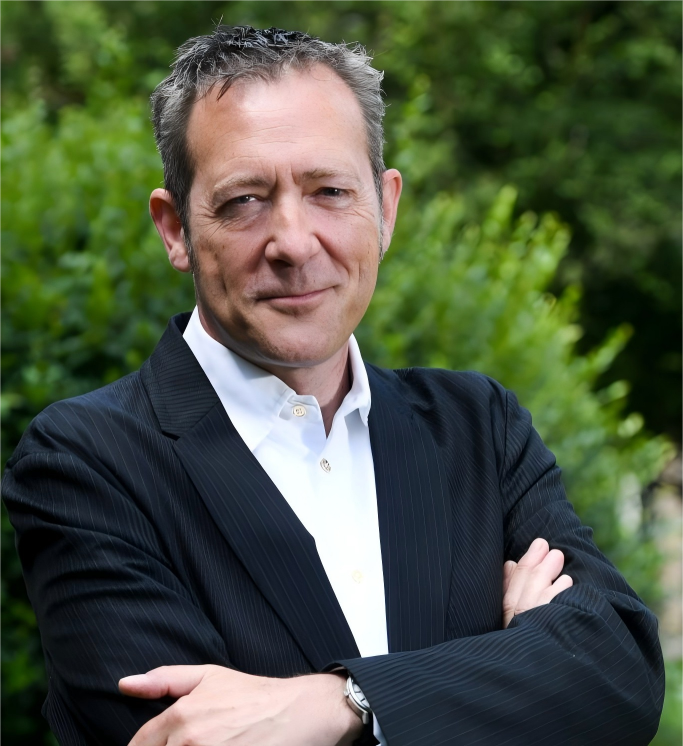
Professor Cleeremans has long focused on the differences between conscious and unconscious information processing, and has systematically advanced the Radical Plasticity Thesis (RPT) and the Self-Organizing Metarepresentational Architecture (SOMA). He argues that consciousness is not an intrinsic property of specific neural states, but a function that gradually emerges as the brain continuously learns and re-describes its own activity—thereby linking learning, representational quality, and subjective experience within a unified mechanistic account. Representative papers appeared in Frontiers in Psychology (2011) and Trends in Cognitive Sciences (2020), and a state-of-the-art review published in 2025 further elaborated its implications for consciousness science and AI ethics. In academic leadership and team building, Professor Cleeremans heads ULB’s CO3 (Consciousness, Cognition & Computation) Laboratory and collaborates across the CRCN (Center for Research in Cognition and Neurosciences). He currently leads two ERC Advanced Grants—one (2014–2019) on the mechanisms of consciousness and another (2022–2027) on its functions—which are driving systematic research from theory and methods through to applications.
- Global Collaboration and Academic Ecosystem
Academicians of the World Academy for Artificial Consciousness hail from institutions such as Harvard University, the Massachusetts Institute of Technology, the University of Cambridge, the University of California, the French Academy of Sciences, the University of Padua, the University of Queensland, Columbia University, and the University of Exeter. Honorary Academicians come from a wide range of countries and regions, including the United States, the United Kingdom, France, Germany, Italy, Sweden, Canada, Australia, Spain, and China. In addition, leading scientists from prominent research institutes and technology companies—such as Google, the Allen Institute for Brain Science, and ZEEKR—also participate.
- About WAAC
The World Academy for Artificial Consciousness (https://www.waac.ac/) is a global academic institution established in Paris in 2025. Its mission is to advance frontier research and international collaboration in artificial consciousness through the integration of science, technology, and philosophy. The Academy publishes open research, policy recommendations, evaluation standards, and more. The current President is Academician Yucong Duan, and the Secretary-General is Dr. Yingbo Li. The Honorary Academician List: On May 3, 2025, WAAC released its first batch of Top 100 Honorary Academicians, recognizing scholars who have made foundational or leading contributions to the theory of artificial consciousness.
Read more
Professor Timothy F. Brady from the University of California, San Diego, Elected as an Academician of the World Academy for Artificial Consciousness (WAAC)
.jpg)
We are pleased to announce that Professor Timothy F. Brady, a professor of Psychology and Neuroscience at the University of California, San Diego (UCSD), has been elected as an Academician of the World Academy for Artificial Consciousness (WAAC) for his pioneering research in the relationship between visual working memory and consciousness.
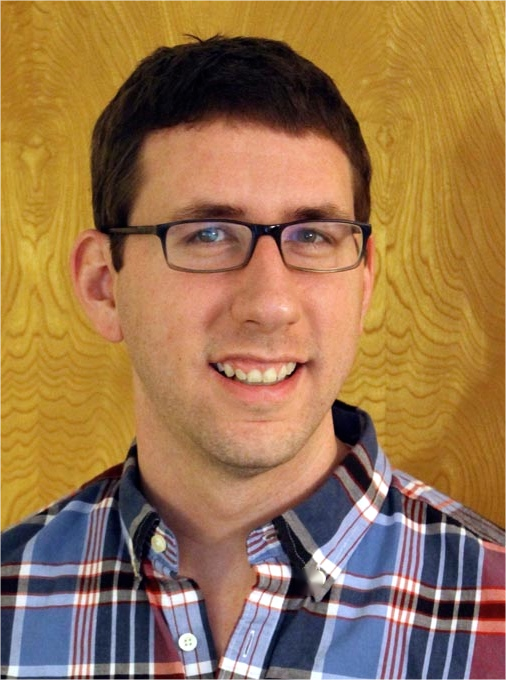
Professor Brady has long been dedicated to studying how humans process and store visual information, with a particular focus on the intersection of visual working memory, perception, and consciousness. He has proposed several theories regarding the capacity for visual information processing and has employed various experimental methods to explore how the brain maintains sensitivity to complex visual stimuli under limited cognitive resources. His research has provided new perspectives on understanding memory capacity, attention mechanisms, and the interactions between perception and consciousness, significantly advancing both theoretical and applied research in this field. Building on this foundation, Professor Brady leads the UCSD Visual Working Memory and Consciousness Lab, conducting interdisciplinary research that includes computational models, neuroscience experiments, and applied studies (such as multitasking and the optimization of visual interfaces). This research continues to deepen our understanding of the role and impact of visual working memory in complex environments. His contributions have not only influenced basic scientific research but also provided valuable theoretical support for practical applications, particularly in the fields of artificial intelligence and cognitive computing.
- Global Collaboration and Academic Ecosystem
Academicians of the World Academy for Artificial Consciousness hail from institutions such as Harvard University, the Massachusetts Institute of Technology, the University of Cambridge, the University of California, the French Academy of Sciences, the University of Padua, the University of Queensland, Columbia University, and the University of Exeter. Honorary Academicians come from a wide range of countries and regions, including the United States, the United Kingdom, France, Germany, Italy, Sweden, Canada, Australia, Spain, and China. In addition, leading scientists from prominent research institutes and technology companies—such as Google, the Allen Institute for Brain Science, and ZEEKR—also participate.
- About WAAC
The World Academy for Artificial Consciousness (https://www.waac.ac/) is a global academic institution established in Paris in 2025. Its mission is to advance frontier research and international collaboration in artificial consciousness through the integration of science, technology, and philosophy. The Academy publishes open research, policy recommendations, evaluation standards, and more. The current President is Academician Yucong Duan, and the Secretary-General is Dr. Yingbo Li. The Honorary Academician List: On May 3, 2025, WAAC released its first batch of Top 100 Honorary Academicians, recognizing scholars who have made foundational or leading contributions to the theory of artificial consciousness.
Read more
World Academy for Artificial Consciousness (WAAC) Appoints Professor Chunhui Wang as Chief Data Officer
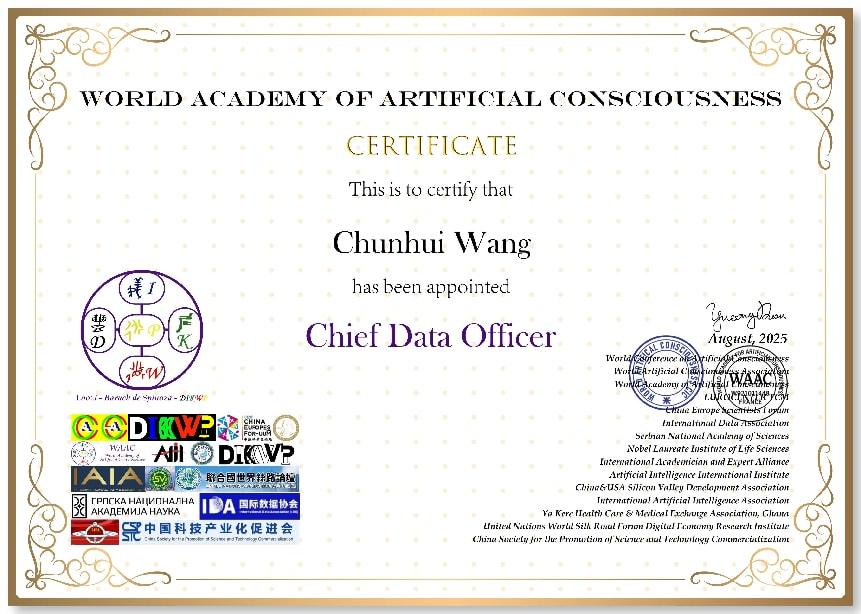
The World Academy for Artificial Consciousness (WAAC) hereby appoints Professor Chunhui Wang as Chief Data Officer (CDO). Professor Wang is an internationally renowned expert in the rule of law for the internet and data, data governance and compliance, and the regulation of generative artificial intelligence. He has extensive scholarly work and practical policy experience in areas including cybersovereignty, the innovative development of data as a factor of production, cross-border data flows, personal information protection, and AI governance.
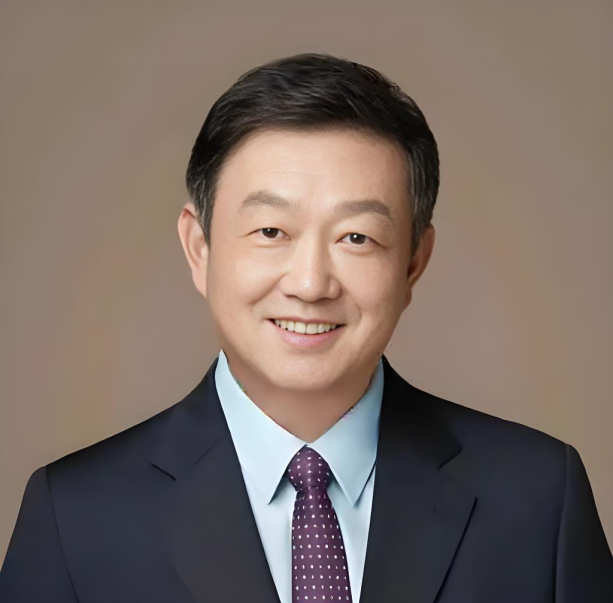
Professor Chunhui Wang currently serves as President of the International Data Association (IDA); Director of the Digital Economy Research Institute at the United Nations World Silk Road Forum; Chief Expert for Decision-Making Consultation at the China Association for Science and Technology (CAST); member of the Expert Committee on the Information and Communications Economy under China’s Ministry of Industry and Information Technology (MIIT); and Vice Chair of the World Association for Artificial Consciousness (WACA). He has long been committed to advancing the rule-of-law–based and internationalized development of the data-factor market. He is the first scholar globally to propose that the boundaries of international law in cyberspace sovereignty should be defined by the “right of cyber-territory” and to recommend incorporating this concept into the United Nations Charter. He took the lead in introducing such concepts as “data factor,” “data economy,” and “shared ownership of data,” which have been reviewed and registered by China’s national copyright authority. He argues that the value creation of data resources lies in the unity of use value and (exchange) value, and he advocates promoting the secure governance and innovative development of the data-factor market through the rule of law. In the development and utilization of public data resources, he has put forward regulatory proposals such as a “dynamic fair-competition review” for the public data-factor market, providing important theoretical support for authorized operations of public data and for fair competition. In the field of AI applications, he has argued that prompt engineering is the bridge of communication between humans and AI systems: humans must input carefully designed prompts so that AI can accurately understand human intent and efficiently perform various specific tasks. As Chief Data Officer, Professor Chunhui Wang will be responsible for building a compliant data-asset system and audit framework to support research on artificial consciousness, helping to achieve controllable, verifiable, and responsible development of artificial consciousness systems.
- Global Collaboration and Academic Ecosystem
WAAC’s membership spans institutions such as Harvard University, the Massachusetts Institute of Technology, the University of Cambridge, the University of California, the French Academy of Sciences, the University of Padua, the University of Queensland, Columbia University, and the University of Exeter, covering countries and regions including the United States, the United Kingdom, France, Germany, Italy, Sweden, Canada, Australia, Spain, and China. In addition, leading scientists from renowned research institutes and technology companies—such as Google, the Allen Institute for Brain Science, and ZEEKR—are also involved.
- About WAAC
World Academy for Artificial Consciousness (https://www.waac.ac/): A global academic institution founded in 2025 in Paris. Its mission is to advance frontier research and international cooperation on artificial consciousness through the integration of science, technology, and philosophy; to release open research, policy recommendations, and evaluation standards. The current President is Academician Yucong Duan, and the Secretary-General is Dr. Yingbo Li. WAAC’s academic system consists of one hundred Honorary Academicians and multiple Permanent Academicians, bringing together leading scholars from around the world in this field.
Read more
Professor Minoru Asada of Osaka University has been elected as an Academician of WAAC.
_0.jpg)
We are pleased to announce that Professor Asada of Osaka University and Osaka University of Information Technology in Japan has been elected as an Academician of WAAC for his outstanding contributions to cognitive developmental robotics, artificial empathy, and artificial consciousness.
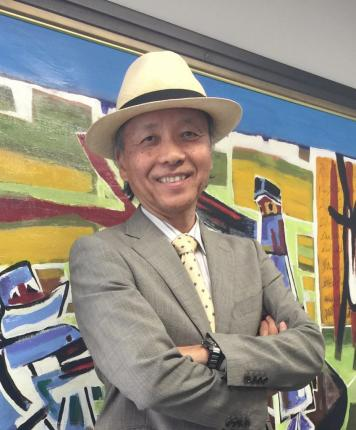
Professor Asada has long been devoted to exploring implementable mechanisms of consciousness and empathy in artificial systems. He has systematically proposed a brain-inspired computational framework centered on pain and touch, advocating the embedding of human-like nociceptive/tactile neural systems in robots, combined with mirror-neuron mechanisms, to drive the hierarchical emergence from emotional contagion to empathy to a sense of morality. His representative work, Artificial Pain May Induce Empathy, Morality, and Ethics in the Conscious Mind of Robots (2019), along with related reviews, has had a wide impact in academia and has become an important reference for research on artificial empathy and artificial consciousness.
- Global Collaboration and Academic Ecosystem
Academicians of the World Academy for Artificial Consciousness hail from institutions such as Harvard University, the Massachusetts Institute of Technology, the University of Cambridge, the University of California, the French Academy of Sciences, the University of Padua, the University of Queensland, Columbia University, and the University of Exeter. Honorary Academicians come from a wide range of countries and regions, including the United States, the United Kingdom, France, Germany, Italy, Sweden, Canada, Australia, Spain, and China. In addition, leading scientists from prominent research institutes and technology companies—such as Google, the Allen Institute for Brain Science, and ZEEKR—also participate.
- About WAAC
The World Academy for Artificial Consciousness (https://www.waac.ac/) is a global academic institution established in Paris in 2025. Its mission is to advance frontier research and international collaboration in artificial consciousness through the integration of science, technology, and philosophy. The Academy publishes open research, policy recommendations, evaluation standards, and more. The current President is Academician Yucong Duan, and the Secretary-General is Dr. Yingbo Li. The Honorary Academician List: On May 3, 2025, WAAC released its first batch of Top 100 Honorary Academicians, recognizing scholars who have made foundational or leading contributions to the theory of artificial consciousness.
Read more
Professor Nicola S. Clayton of the University of Cambridge has been elected as an Academician of WAAC.
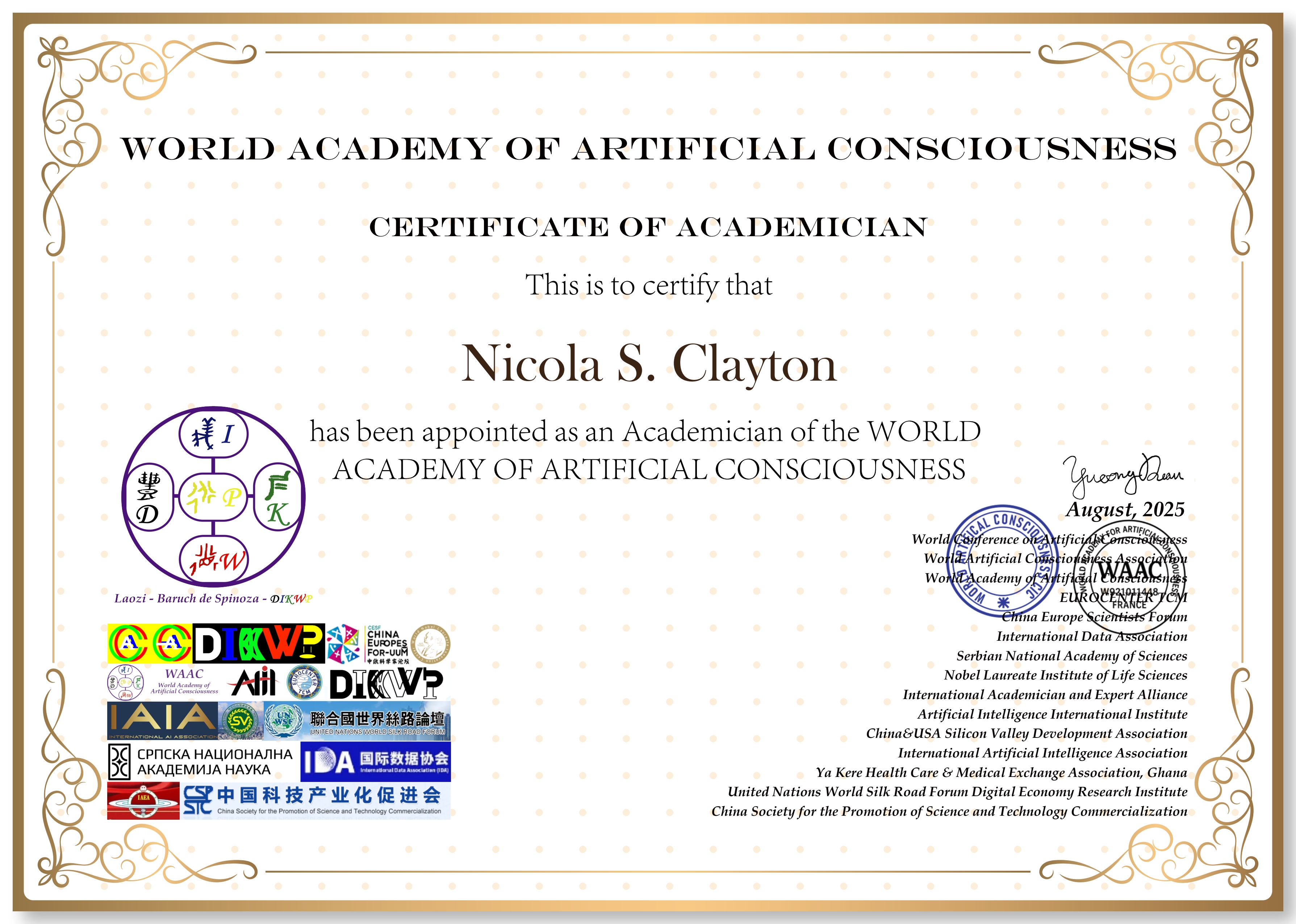
We are pleased to announce that Professor Nicola S. Clayton—Professor of Comparative Cognition in the Department of Psychology at the University of Cambridge and a Fellow of the Royal Society (FRS, elected 2010)—has been elected as an Academician of the World Academy for Artificial Consciousness (WAAC) for her outstanding contributions to corvid cognition, future planning, and signs of consciousness.
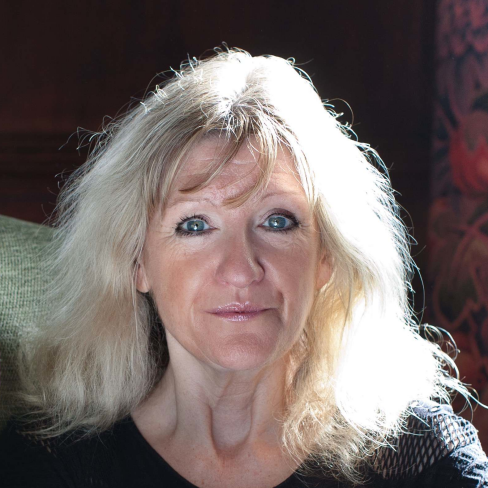
Using corvids (such as the western scrub-jay) as model species, Professor Clayton has long and systematically revealed episodic-like memory and future-oriented planning in nonhuman animals: her team provided the first behavioral evidence of “what–where–when” memory in Nature (1998), and further showed in Nature (2007) that scrub-jays can prepare for tomorrow, challenging the view that future planning is unique to humans. These studies offer milestone evidence for understanding animal intelligence and indicators of consciousness, and have profoundly influenced the development of comparative cognition.
- Global Collaboration and Academic Ecosystem
Academicians of the World Academy for Artificial Consciousness hail from institutions such as Harvard University, the Massachusetts Institute of Technology, the University of Cambridge, the University of California, the French Academy of Sciences, the University of Padua, the University of Queensland, Columbia University, and the University of Exeter. Honorary Academicians come from a wide range of countries and regions, including the United States, the United Kingdom, France, Germany, Italy, Sweden, Canada, Australia, Spain, and China. In addition, leading scientists from prominent research institutes and technology companies—such as Google, the Allen Institute for Brain Science, and ZEEKR—also participate.
- About WAAC
The World Academy for Artificial Consciousness (https://www.waac.ac/) is a global academic institution established in Paris in 2025. Its mission is to advance frontier research and international collaboration in artificial consciousness through the integration of science, technology, and philosophy. The Academy publishes open research, policy recommendations, evaluation standards, and more. The current President is Academician Yucong Duan, and the Secretary-General is Dr. Yingbo Li. The Honorary Academician List: On May 3, 2025, WAAC released its first batch of Top 100 Honorary Academicians, recognizing scholars who have made foundational or leading contributions to the theory of artificial consciousness.
Read more
Professor Nicholas G. Hatsopoulos of the University of Chicago has been elected as an Academician of WAAC.
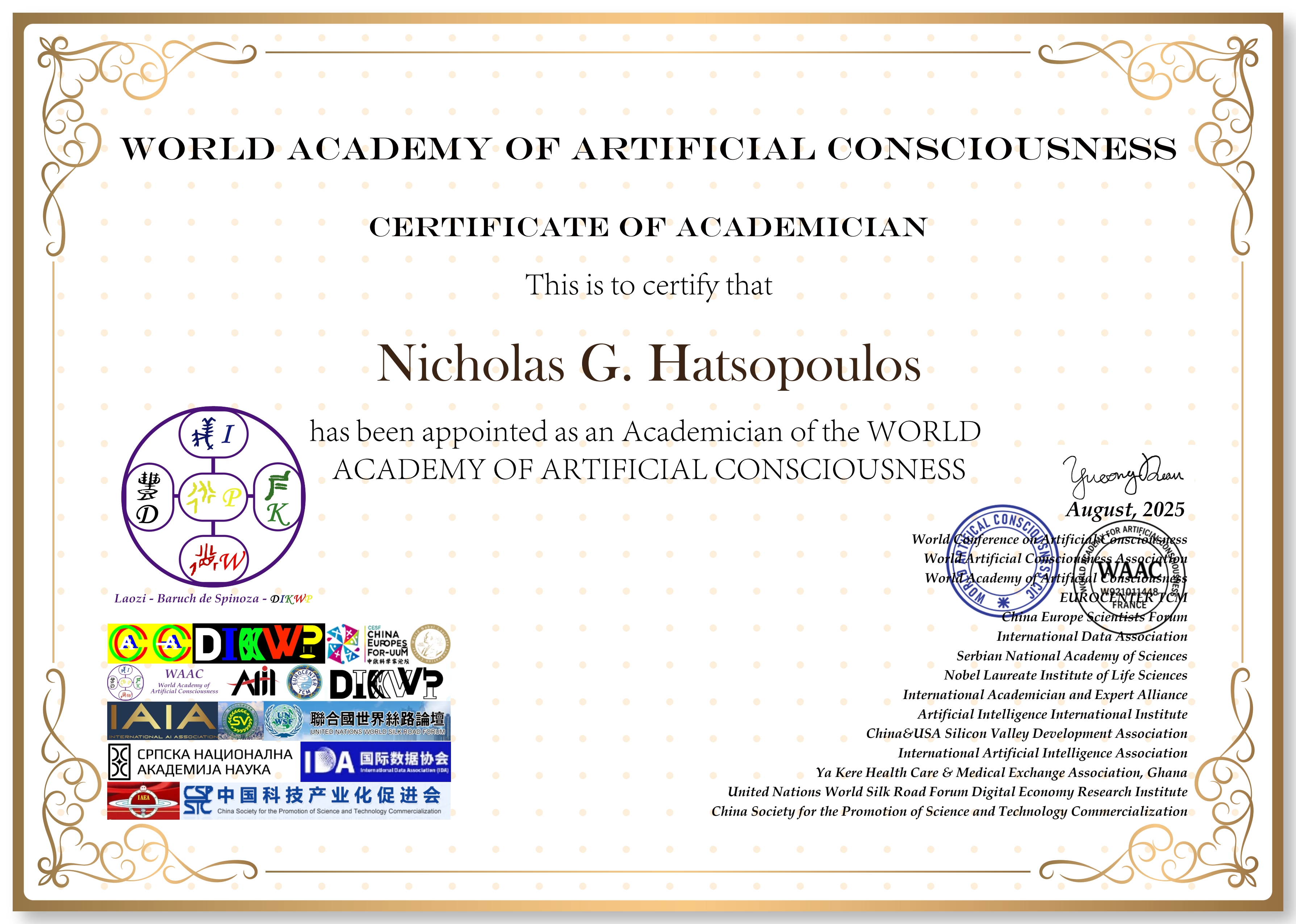
We are pleased to announce that Professor Nicholas G. Hatsopoulos—Professor in the Department of Organismal Biology & Anatomy at The University of Chicago and a core member of the interdisciplinary programs in Neuroscience and Computational Neuroscience—has been elected as an Academician of the World Academy for Artificial Consciousness (WAAC) for his outstanding contributions to motor cortex coding, population neurocomputation, and brain–computer interfaces (BCIs).
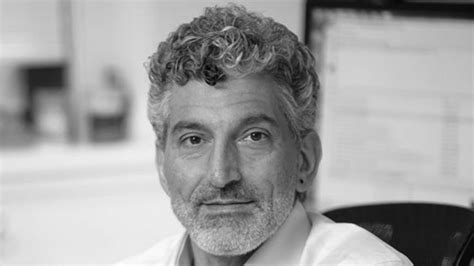
Professor Hatsopoulos has long been devoted to uncovering how the motor cortex encodes and generates movement. His team proposed and validated the “movement fragments”/preferred-trajectory coding view: individual motor-cortex neurons exhibit selectivity for time-evolving movement trajectories rather than merely tuning to instantaneous kinematic parameters, helping drive a paradigm shift from “static tuning” to “temporal trajectory” frameworks. In BCIs and neuroprosthetics, his group has significantly enhanced device stability and usability through closed-loop sensory feedback and population-activity decoding, with multiple University of Chicago news and research reports demonstrating how tactile/proprioceptive feedback improves performance and its potential for clinical translation.
- Global Collaboration and Academic Ecosystem
Academicians of the World Academy for Artificial Consciousness hail from institutions such as Harvard University, the Massachusetts Institute of Technology, the University of Cambridge, the University of California, the French Academy of Sciences, the University of Padua, the University of Queensland, Columbia University, and the University of Exeter. Honorary Academicians come from a wide range of countries and regions, including the United States, the United Kingdom, France, Germany, Italy, Sweden, Canada, Australia, Spain, and China. In addition, leading scientists from prominent research institutes and technology companies—such as Google, the Allen Institute for Brain Science, and ZEEKR—also participate.
- About WAAC
The World Academy for Artificial Consciousness (https://www.waac.ac/) is a global academic institution established in Paris in 2025. Its mission is to advance frontier research and international collaboration in artificial consciousness through the integration of science, technology, and philosophy. The Academy publishes open research, policy recommendations, evaluation standards, and more. The current President is Academician Yucong Duan, and the Secretary-General is Dr. Yingbo Li. The Honorary Academician List: On May 3, 2025, WAAC released its first batch of Top 100 Honorary Academicians, recognizing scholars who have made foundational or leading contributions to the theory of artificial consciousness.
Read more
Professor Nilli Lavie of UCL elected Academician of the World Academy for Artificial Consciousness (WAAC)
.jpg)
We are delighted to announce that Professor Nilli Lavie of the University College London (UCL), Professor of Psychology and Brain Sciences, has been elected an Academician of the World Academy for Artificial Consciousness (WAAC) in recognition of her pioneering contributions to research on attention, perceptual load, and the relationship between attention and consciousness.
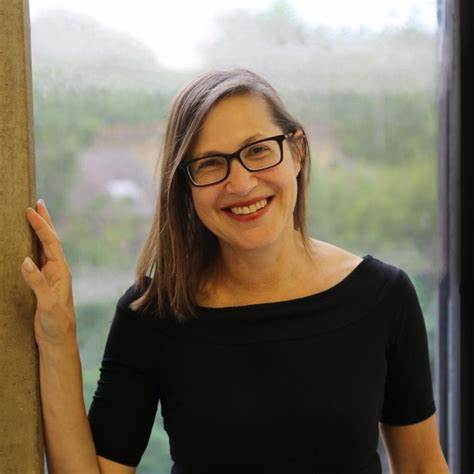
Professor Lavie has long focused on the mechanisms of human attentional selection and consciousness, systematically proposing and developing Load Theory: under high perceptual load, individuals’ ability to process irrelevant stimuli is significantly reduced, giving rise to phenomena such as distraction suppression and “inattentional/unaware” effects. This theory has been landmark in reconciling the early–late selection debate and in explaining distraction and misses in complex real-world environments. Building on this foundation, Professor Lavie leads UCL’s Attention and Cognitive Control laboratory in cross-disciplinary work spanning cognitive neuroscience, computational modeling, and applied settings (e.g., human–machine interaction in driving, distraction management in education), advancing a tight theory–evidence loop on the relationship between attention and consciousness. She has also been elected to the British Academy (FBA) and recognized with honors from organizations such as the British Psychological Society and the Experimental Psychology Society.
- Global Collaboration and Academic Ecosystem
Academicians of the World Academy for Artificial Consciousness hail from institutions such as Harvard University, the Massachusetts Institute of Technology, the University of Cambridge, the University of California, the French Academy of Sciences, the University of Padua, the University of Queensland, Columbia University, and the University of Exeter. Honorary Academicians come from a wide range of countries and regions, including the United States, the United Kingdom, France, Germany, Italy, Sweden, Canada, Australia, Spain, and China. In addition, leading scientists from prominent research institutes and technology companies—such as Google, the Allen Institute for Brain Science, and ZEEKR—also participate.
- About WAAC
The World Academy for Artificial Consciousness (https://www.waac.ac/) is a global academic institution established in Paris in 2025. Its mission is to advance frontier research and international collaboration in artificial consciousness through the integration of science, technology, and philosophy. The Academy publishes open research, policy recommendations, evaluation standards, and more. The current President is Academician Yucong Duan, and the Secretary-General is Dr. Yingbo Li. The Honorary Academician List: On May 3, 2025, WAAC released its first batch of Top 100 Honorary Academicians, recognizing scholars who have made foundational or leading contributions to the theory of artificial consciousness.
Read more
Nobel Laureate May-Britt Moser Elected as an Academician of WAAC
.jpg)
We are pleased to announce that May-Britt Moser, Professor at the Norwegian University of Science and Technology (NTNU) and co-recipient of the 2014 Nobel Prize in Physiology or Medicine, has been elected as an Academician of WAAC for her outstanding contributions to spatial cognitive neuroscience and the brain’s positioning system.
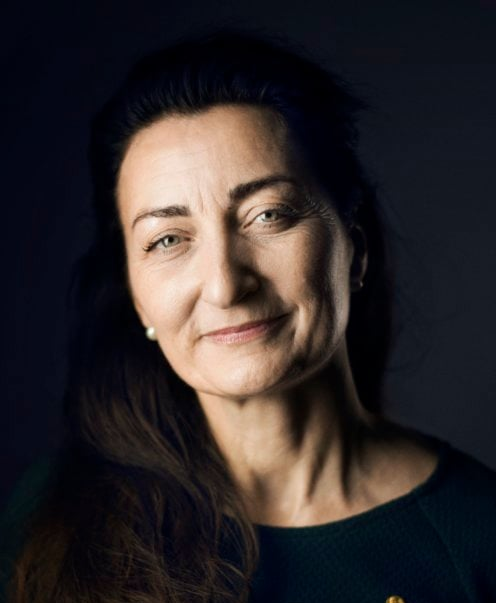
Professor Moser is renowned for her pioneering research on grid cells, which revealed a key neural coding mechanism for spatial localization and navigation and led to the shared 2014 Nobel Prize. Her long-standing focus on the hippocampal–entorhinal circuit and space/time representations has provided solid biological inspiration for spatial representation learning, autonomous navigation, and contextual memory in artificial systems, advancing research on artificial consciousness and interpretable intelligent agents.
- Global Collaboration and Academic Ecosystem
Academicians of the World Academy for Artificial Consciousness hail from institutions such as Harvard University, the Massachusetts Institute of Technology, the University of Cambridge, the University of California, the French Academy of Sciences, the University of Padua, the University of Queensland, Columbia University, and the University of Exeter. Honorary Academicians come from a wide range of countries and regions, including the United States, the United Kingdom, France, Germany, Italy, Sweden, Canada, Australia, Spain, and China. In addition, leading scientists from prominent research institutes and technology companies—such as Google, the Allen Institute for Brain Science, and ZEEKR—also participate.
- About WAAC
The World Academy for Artificial Consciousness (https://www.waac.ac/) is a global academic institution established in Paris in 2025. Its mission is to advance frontier research and international collaboration in artificial consciousness through the integration of science, technology, and philosophy. The Academy publishes open research, policy recommendations, evaluation standards, and more. The current President is Academician Yucong Duan, and the Secretary-General is Dr. Yingbo Li. The Honorary Academician List: On May 3, 2025, WAAC released its first batch of Top 100 Honorary Academicians, recognizing scholars who have made foundational or leading contributions to the theory of artificial consciousness.
Read more
Nicolaus Copernicus University Professor Włodzisław Duch Elected as Academician of the World Academy for Artificial Consciousness (WAAC)
.jpg)
We are pleased to announce that Maiken Nedergaard, Co-Director of the Center for Translational Neuromedicine (CTN) at the University of Rochester Medical Center and Professor of Glial Cell Biology at the University of Copenhagen, has been elected as an Academician of WAAC for her pioneering contributions to astrocytes and the glymphatic system, as well as the mechanisms of sleep-dependent clearance of brain metabolites.
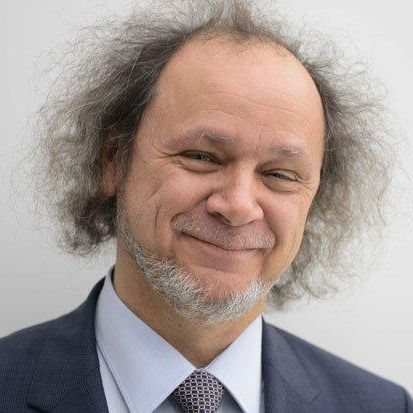
Over the years, Professor Nedergaard has advanced a research program centered on “glia — glymphatic system — sleep-driven clearance — clinical translation,” building an evidential chain from basic science to application: in 2012, her team reported in Science Translational Medicine the brain’s glymphatic system, showing that cerebrospinal fluid can enter and exchange with the parenchyma via perivascular pathways; in 2013, in Science, they showed that sleep or anesthesia expands the interstitial space and markedly enhances clearance, providing a direct physiological account of sleep’s restorative function. Subsequent work in reviews and clinical imaging/modeling has continued to extend the field, helping shape evaluation paradigms and intervention strategies anchored in testable “physiological phenotypes of consciousness,” and offering key levers for comparative research on “consciousness–state–function” across artificial and biological systems.
- Global Collaboration and Academic Ecosystem
Academicians of the World Academy for Artificial Consciousness hail from institutions such as Harvard University, the Massachusetts Institute of Technology, the University of Cambridge, the University of California, the French Academy of Sciences, the University of Padua, the University of Queensland, Columbia University, and the University of Exeter. Honorary Academicians come from a wide range of countries and regions, including the United States, the United Kingdom, France, Germany, Italy, Sweden, Canada, Australia, Spain, and China. In addition, leading scientists from prominent research institutes and technology companies—such as Google, the Allen Institute for Brain Science, and ZEEKR—also participate.
- About WAAC
The World Academy for Artificial Consciousness (https://www.waac.ac/) is a global academic institution established in Paris in 2025. Its mission is to advance frontier research and international collaboration in artificial consciousness through the integration of science, technology, and philosophy. The Academy publishes open research, policy recommendations, evaluation standards, and more. The current President is Academician Yucong Duan, and the Secretary-General is Dr. Yingbo Li. The Honorary Academician List: On May 3, 2025, WAAC released its first batch of Top 100 Honorary Academicians, recognizing scholars who have made foundational or leading contributions to the theory of artificial consciousness.
Read more