Tagged: Artificial Consciousness
Professor Giacomo Rizzolatti of the University of Parma Elected as an Academician of the World Academy for Artificial Consciousness (WAAC)
_0.jpg)
We are pleased to announce that Giacomo Rizzolatti, Professor Emeritus of Physiology at the University of Parma and a pioneering figure in mirror-neuron research, has been elected an Academician of the World Academy for Artificial Consciousness (WAAC), in recognition of his foundational contributions to the discovery and mechanistic elucidation of mirror neurons, action understanding and social cognition, and self–other representation and consciousness.
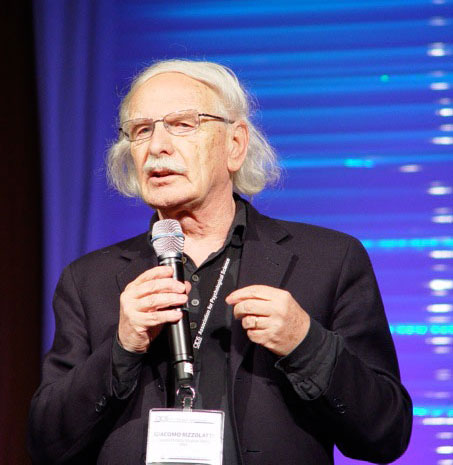
Over the past decades, Professor Rizzolatti and the “Parma school” have systematically revealed the mirror-neuron mechanism: his team first reported mirror neurons in the macaque ventral premotor cortex (area F5) and proposed their key role in action understanding and imitation; subsequent work helped establish the mirror-neuron system in humans and its broader theoretical framework, advancing research in social cognition and consciousness. In recognition of these advances, he shared The Brain Prize in 2014.
- Global Collaboration and Academic Ecosystem
Academicians of the World Academy for Artificial Consciousness hail from institutions such as Harvard University, the Massachusetts Institute of Technology, the University of Cambridge, the University of California, the French Academy of Sciences, the University of Padua, the University of Queensland, Columbia University, and the University of Exeter. Honorary Academicians come from a wide range of countries and regions, including the United States, the United Kingdom, France, Germany, Italy, Sweden, Canada, Australia, Spain, and China. In addition, leading scientists from prominent research institutes and technology companies—such as Google, the Allen Institute for Brain Science, and ZEEKR—also participate.
- About WAAC
The World Academy for Artificial Consciousness (https://www.waac.ac/) is a global academic institution established in Paris in 2025. Its mission is to advance frontier research and international collaboration in artificial consciousness through the integration of science, technology, and philosophy. The Academy publishes open research, policy recommendations, evaluation standards, and more. The current President is Academician Yucong Duan, and the Secretary-General is Dr. Yingbo Li. The Honorary Academician List: On May 3, 2025, WAAC released its first batch of Top 100 Honorary Academicians, recognizing scholars who have made foundational or leading contributions to the theory of artificial consciousness.
Read more
Professor Friedemann Pulvermüller from the Free University of Berlin has been elected as an academician of the World Academy of Artificial Consciousness (WAAC)
_0.jpg)
We are pleased to announce that Professor Friedemann Pulvermüller, a professor of language neuroscience at the Free University of Berlin, has been honored with the title of academician of the World Academy of Artificial Consciousness (WAAC) for his groundbreaking research in the fields of language neurobiology, mechanisms of consciousness, and symbolic representation.
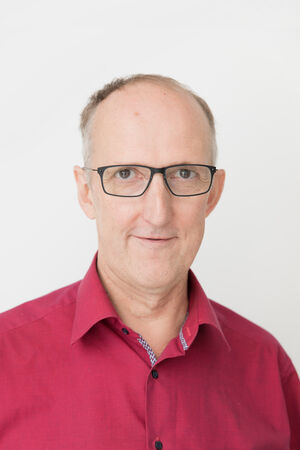
Professor Pulvermüller has long been dedicated to uncovering the relationship between language and the brain, proposing the “active perception-action loop” model, which emphasizes that language comprehension relies not only on the neural circuits of perception and action systems but also on the interaction between these circuits. His research has provided significant neuroscientific foundations for the construction of artificial consciousness and has fostered interdisciplinary collaboration and development.
- Global Collaboration and Academic Ecosystem
Academicians of the World Academy for Artificial Consciousness hail from institutions such as Harvard University, the Massachusetts Institute of Technology, the University of Cambridge, the University of California, the French Academy of Sciences, the University of Padua, the University of Queensland, Columbia University, and the University of Exeter. Honorary Academicians come from a wide range of countries and regions, including the United States, the United Kingdom, France, Germany, Italy, Sweden, Canada, Australia, Spain, and China. In addition, leading scientists from prominent research institutes and technology companies—such as Google, the Allen Institute for Brain Science, and ZEEKR—also participate.
- About WAAC
The World Academy for Artificial Consciousness (https://www.waac.ac/) is a global academic institution established in Paris in 2025. Its mission is to advance frontier research and international collaboration in artificial consciousness through the integration of science, technology, and philosophy. The Academy publishes open research, policy recommendations, evaluation standards, and more. The current President is Academician Yucong Duan, and the Secretary-General is Dr. Yingbo Li. The Honorary Academician List: On May 3, 2025, WAAC released its first batch of Top 100 Honorary Academicians, recognizing scholars who have made foundational or leading contributions to the theory of artificial consciousness.
Read more
Professor Gualtiero Piccinini from the University of Missouri has been elected as an academician of the World Academy of Artificial Consciousness (WAAC)
_0.jpg)
We are pleased to announce that Professor Gualtiero Piccinini, a professor of philosophy and a computational philosopher at the University of Missouri, Columbia, has been honored with the title of academician of the World Academy of Artificial Consciousness (WAAC) for his outstanding contributions to the fields of computationalism, neural computation theory, and the study of consciousness mechanisms.
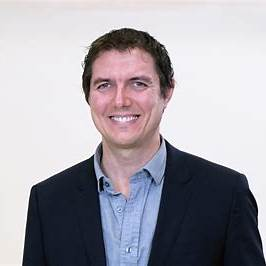
Professor Piccinini has long been dedicated to exploring the relationship between the mind and computation, proposing the “mechanistic explanation of physical computation” theory, which emphasizes that computation is a process of mechanisms in physical systems, rather than merely symbolic manipulation. In research published with his collaborators in the journal Cognitive Science, he argued that neural computation is neither digital computation nor analog computation, but a distinct mechanistic process. His seminal work, Neurocognitive Mechanisms: Explaining Biological Cognition, systematically elaborates on the application of computational theory in biological cognition, offering new perspectives on the neural mechanisms of consciousness.
- Global Collaboration and Academic Ecosystem
Academicians of the World Academy for Artificial Consciousness hail from institutions such as Harvard University, the Massachusetts Institute of Technology, the University of Cambridge, the University of California, the French Academy of Sciences, the University of Padua, the University of Queensland, Columbia University, and the University of Exeter. Honorary Academicians come from a wide range of countries and regions, including the United States, the United Kingdom, France, Germany, Italy, Sweden, Canada, Australia, Spain, and China. In addition, leading scientists from prominent research institutes and technology companies—such as Google, the Allen Institute for Brain Science, and ZEEKR—also participate.
- About WAAC
The World Academy for Artificial Consciousness (https://www.waac.ac/) is a global academic institution established in Paris in 2025. Its mission is to advance frontier research and international collaboration in artificial consciousness through the integration of science, technology, and philosophy. The Academy publishes open research, policy recommendations, evaluation standards, and more. The current President is Academician Yucong Duan, and the Secretary-General is Dr. Yingbo Li. The Honorary Academician List: On May 3, 2025, WAAC released its first batch of Top 100 Honorary Academicians, recognizing scholars who have made foundational or leading contributions to the theory of artificial consciousness.
Read more
Professor Greg DeAngelis from the University of Rochester has been elected as an academician of the World Academy of Artificial Consciousness (WAAC)
_0.jpg)
We are pleased to announce that Professor Greg DeAngelis, a professor in the Department of Brain and Cognitive Sciences and a visual neuroscientist at the University of Rochester, has been honored with the title of academician of the World Academy of Artificial Consciousness (WAAC) for his groundbreaking research in the fields of depth perception, stereovision, and conscious perception.
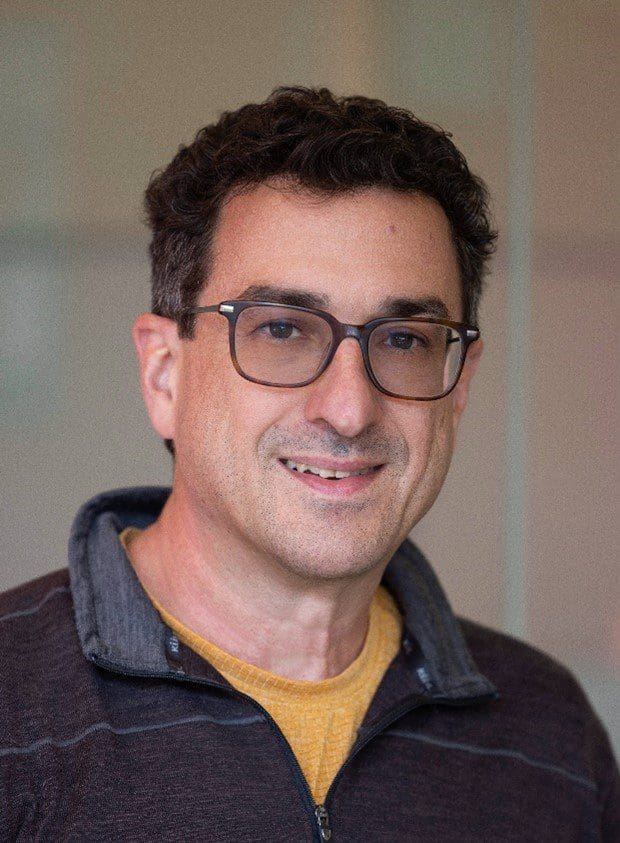
Professor DeAngelis has long been dedicated to uncovering how the brain processes stereoscopic visual information, proposing the “motion disparity” model, which emphasizes the influence of self-motion on depth perception. His research has shown that neurons in the MT area of the monkey brain respond to binocular disparity and contribute to the formation of stereoscopic depth perception. Additionally, his team discovered that neurons in the monkey MT area integrate visual motion and eye movement signals to perceive depth through motion disparity, providing critical insights into how the brain processes three-dimensional information.
- Global Collaboration and Academic Ecosystem
Academicians of the World Academy for Artificial Consciousness hail from institutions such as Harvard University, the Massachusetts Institute of Technology, the University of Cambridge, the University of California, the French Academy of Sciences, the University of Padua, the University of Queensland, Columbia University, and the University of Exeter. Honorary Academicians come from a wide range of countries and regions, including the United States, the United Kingdom, France, Germany, Italy, Sweden, Canada, Australia, Spain, and China. In addition, leading scientists from prominent research institutes and technology companies—such as Google, the Allen Institute for Brain Science, and ZEEKR—also participate.
- About WAAC
The World Academy for Artificial Consciousness (https://www.waac.ac/) is a global academic institution established in Paris in 2025. Its mission is to advance frontier research and international collaboration in artificial consciousness through the integration of science, technology, and philosophy. The Academy publishes open research, policy recommendations, evaluation standards, and more. The current President is Academician Yucong Duan, and the Secretary-General is Dr. Yingbo Li. The Honorary Academician List: On May 3, 2025, WAAC released its first batch of Top 100 Honorary Academicians, recognizing scholars who have made foundational or leading contributions to the theory of artificial consciousness.
Read more
Professor Erkki Oja from Aalto University has been elected as an academician of the World Academy of Artificial Consciousness (WAAC)
_0.jpg)
We are pleased to announce that Professor Erkki Oja, a professor in the Department of Computer Science and Engineering at Aalto University and recipient of the IEEE Neural Networks Pioneer Award, has been honored with the title of academician of the World Academy of Artificial Consciousness (WAAC) for his groundbreaking research in independent component analysis (ICA) and Hebbian learning rules.
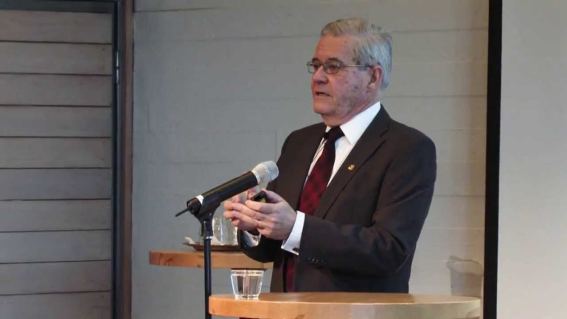
Professor Oja has long been dedicated to research in the fields of neural networks and machine learning. He proposed the famous “Oja’s learning rule,” an improved version of the standard Hebbian learning rule, which solves stability issues through multiplicative normalization and provides a computational model for principal component analysis (PCA). Additionally, Professor Oja and his collaborators introduced an independent component analysis method based on a general nonlinear Hebbian learning rule, offering new perspectives in the fields of blind source separation and signal processing.
- Global Collaboration and Academic Ecosystem
Academicians of the World Academy for Artificial Consciousness hail from institutions such as Harvard University, the Massachusetts Institute of Technology, the University of Cambridge, the University of California, the French Academy of Sciences, the University of Padua, the University of Queensland, Columbia University, and the University of Exeter. Honorary Academicians come from a wide range of countries and regions, including the United States, the United Kingdom, France, Germany, Italy, Sweden, Canada, Australia, Spain, and China. In addition, leading scientists from prominent research institutes and technology companies—such as Google, the Allen Institute for Brain Science, and ZEEKR—also participate.
- About WAAC
The World Academy for Artificial Consciousness (https://www.waac.ac/) is a global academic institution established in Paris in 2025. Its mission is to advance frontier research and international collaboration in artificial consciousness through the integration of science, technology, and philosophy. The Academy publishes open research, policy recommendations, evaluation standards, and more. The current President is Academician Yucong Duan, and the Secretary-General is Dr. Yingbo Li. The Honorary Academician List: On May 3, 2025, WAAC released its first batch of Top 100 Honorary Academicians, recognizing scholars who have made foundational or leading contributions to the theory of artificial consciousness.
Read more
Professor Giacomo Indiveri from the University of Zurich and ETH Zurich has been elected as an academician of the World Academy of Artificial Consciousness (WAAC)
_0.jpg)
We are pleased to announce that Professor Giacomo Indiveri, a professor at the University of Zurich and ETH Zurich, and the director of the Institute of Neuroinformatics (INI), has been honored with the title of academician of the World Academy of Artificial Consciousness (WAAC) for his groundbreaking research in neuromorphic computing, brain-inspired hardware, and clues to artificial consciousness.
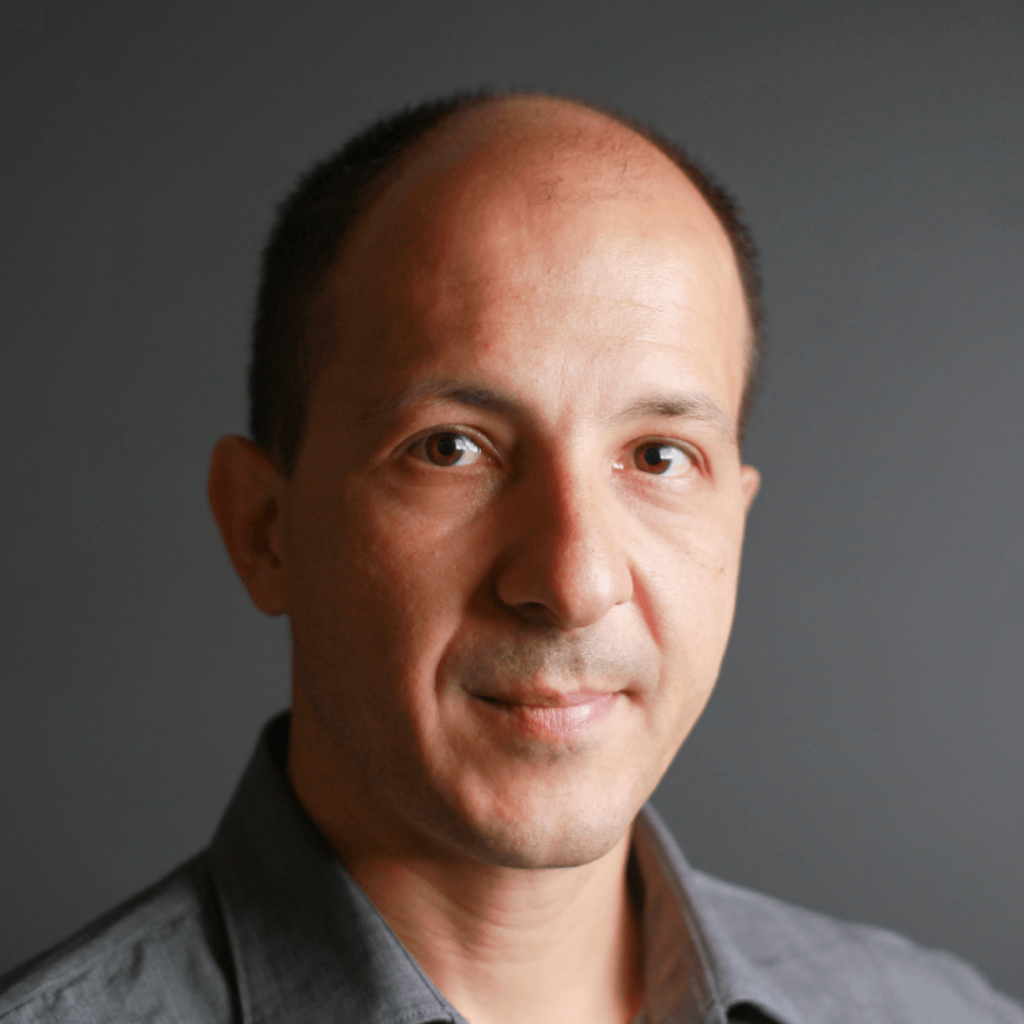
Professor Indiveri has long been dedicated to building brain-like computational systems, proposing neuromorphic processors based on spiking neural networks (SNN) and event-driven architectures, aimed at achieving low-power, high-performance artificial intelligence systems. His research has not only advanced the field of neuromorphic engineering but also provided new perspectives on understanding the neural mechanisms of consciousness.
- Global Collaboration and Academic Ecosystem
Academicians of the World Academy for Artificial Consciousness hail from institutions such as Harvard University, the Massachusetts Institute of Technology, the University of Cambridge, the University of California, the French Academy of Sciences, the University of Padua, the University of Queensland, Columbia University, and the University of Exeter. Honorary Academicians come from a wide range of countries and regions, including the United States, the United Kingdom, France, Germany, Italy, Sweden, Canada, Australia, Spain, and China. In addition, leading scientists from prominent research institutes and technology companies—such as Google, the Allen Institute for Brain Science, and ZEEKR—also participate.
- About WAAC
The World Academy for Artificial Consciousness (https://www.waac.ac/) is a global academic institution established in Paris in 2025. Its mission is to advance frontier research and international collaboration in artificial consciousness through the integration of science, technology, and philosophy. The Academy publishes open research, policy recommendations, evaluation standards, and more. The current President is Academician Yucong Duan, and the Secretary-General is Dr. Yingbo Li. The Honorary Academician List: On May 3, 2025, WAAC released its first batch of Top 100 Honorary Academicians, recognizing scholars who have made foundational or leading contributions to the theory of artificial consciousness.
Read more
Nobel laureate Professor Françoise Barré-Sinoussi has been elected as an academician of the World Academy of Artificial Consciousness (WAAC)
_0.jpg)
We are pleased to announce that Professor Françoise Barré-Sinoussi of the Institut Pasteur in France, recipient of the 2008 Nobel Prize in Physiology or Medicine, has been honored with the title of academician of the World Academy of Artificial Consciousness (WAAC) for her pioneering contributions to research on HIV (human immunodeficiency virus).
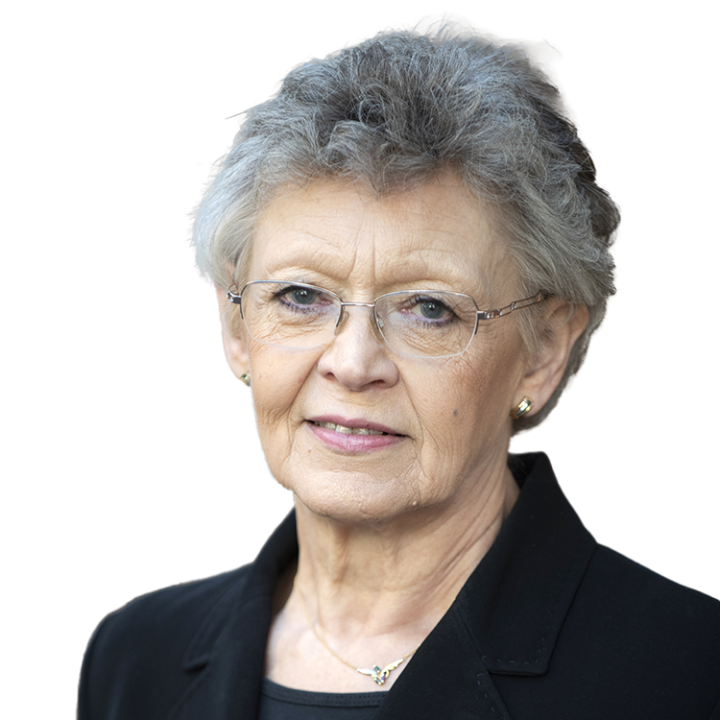
In 1983, Professor Barré-Sinoussi first isolated HIV from the lymph nodes of patients with AIDS, laying the groundwork for the diagnosis and treatment of the disease. Her research not only advanced early detection methods for HIV but also provided a scientific basis for the development of antiretroviral therapies. Beyond her laboratory work, Professor Barré-Sinoussi has been deeply engaged in global HIV/AIDS prevention and control, with a particular focus on fostering research collaboration and capacity building in resource-limited settings. She has served as president of the International AIDS Society (IAS) and has held key roles on multiple international scientific committees.
- Global Collaboration and Academic Ecosystem
Academicians of the World Academy for Artificial Consciousness hail from institutions such as Harvard University, the Massachusetts Institute of Technology, the University of Cambridge, the University of California, the French Academy of Sciences, the University of Padua, the University of Queensland, Columbia University, and the University of Exeter. Honorary Academicians come from a wide range of countries and regions, including the United States, the United Kingdom, France, Germany, Italy, Sweden, Canada, Australia, Spain, and China. In addition, leading scientists from prominent research institutes and technology companies—such as Google, the Allen Institute for Brain Science, and ZEEKR—also participate.
- About WAAC
The World Academy for Artificial Consciousness (https://www.waac.ac/) is a global academic institution established in Paris in 2025. Its mission is to advance frontier research and international collaboration in artificial consciousness through the integration of science, technology, and philosophy. The Academy publishes open research, policy recommendations, evaluation standards, and more. The current President is Academician Yucong Duan, and the Secretary-General is Dr. Yingbo Li. The Honorary Academician List: On May 3, 2025, WAAC released its first batch of Top 100 Honorary Academicians, recognizing scholars who have made foundational or leading contributions to the theory of artificial consciousness.
Read more
Professor Ezequiel Morsella of San Francisco State University has been elected as an academician of the World Academy for Artificial Consciousness (WAAC)
_0.jpg)
We are pleased to announce that Ezequiel Morsella, professor of psychology at San Francisco State University and a scholar of consciousness and action control, has been elected an academician of the World Academy for Artificial Consciousness (WAAC) for his foundational work on Passive Frame Theory (PFT), the mechanisms by which conscious contents are generated, and the role of consciousness in voluntary action selection.
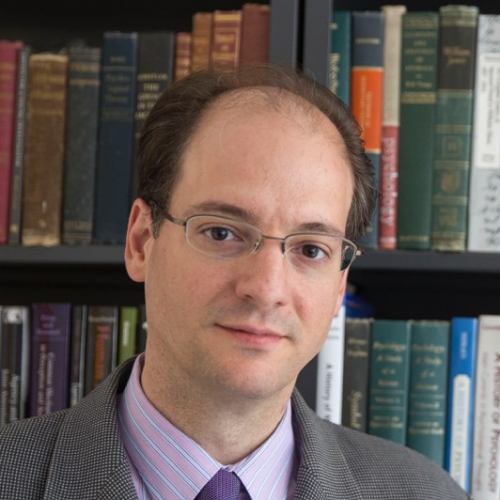
Over many years, Professor Morsella has used a combined theoretical and experimental approach to systematically reveal the “passive yet necessary” role of consciousness in the selection of voluntary skeletomotor actions. Presented as a target article in Behavioral and Brain Sciences, his formulation and synthesis of PFT offers a new integrative framework for clarifying the functional boundaries and implementation mechanisms of consciousness. Meanwhile, public- and campus-facing research communications from his team have showcased evidence that complex ideas can enter consciousness involuntarily, further supporting the view that conscious contents can be generated automatically.
- Global Collaboration and Academic Ecosystem
Academicians of the World Academy for Artificial Consciousness hail from institutions such as Harvard University, the Massachusetts Institute of Technology, the University of Cambridge, the University of California, the French Academy of Sciences, the University of Padua, the University of Queensland, Columbia University, and the University of Exeter. Honorary Academicians come from a wide range of countries and regions, including the United States, the United Kingdom, France, Germany, Italy, Sweden, Canada, Australia, Spain, and China. In addition, leading scientists from prominent research institutes and technology companies—such as Google, the Allen Institute for Brain Science, and ZEEKR—also participate.
- About WAAC
The World Academy for Artificial Consciousness (https://www.waac.ac/) is a global academic institution established in Paris in 2025. Its mission is to advance frontier research and international collaboration in artificial consciousness through the integration of science, technology, and philosophy. The Academy publishes open research, policy recommendations, evaluation standards, and more. The current President is Academician Yucong Duan, and the Secretary-General is Dr. Yingbo Li. The Honorary Academician List: On May 3, 2025, WAAC released its first batch of Top 100 Honorary Academicians, recognizing scholars who have made foundational or leading contributions to the theory of artificial consciousness.
Read more
Professor Étienne Koechlin of École Normale Supérieure (PSL) has been elected as an academician of the World Academy for Artificial Consciousness (WAAC)
_0.jpg)
We are pleased to announce that Professor Étienne Koechlin, a cognitive neuroscientist at École Normale Supérieure (PSL), has been elected an academician of the World Academy for Artificial Consciousness (WAAC) for his foundational research on hierarchical control in the prefrontal cortex, rule–value integration, and conscious planning.
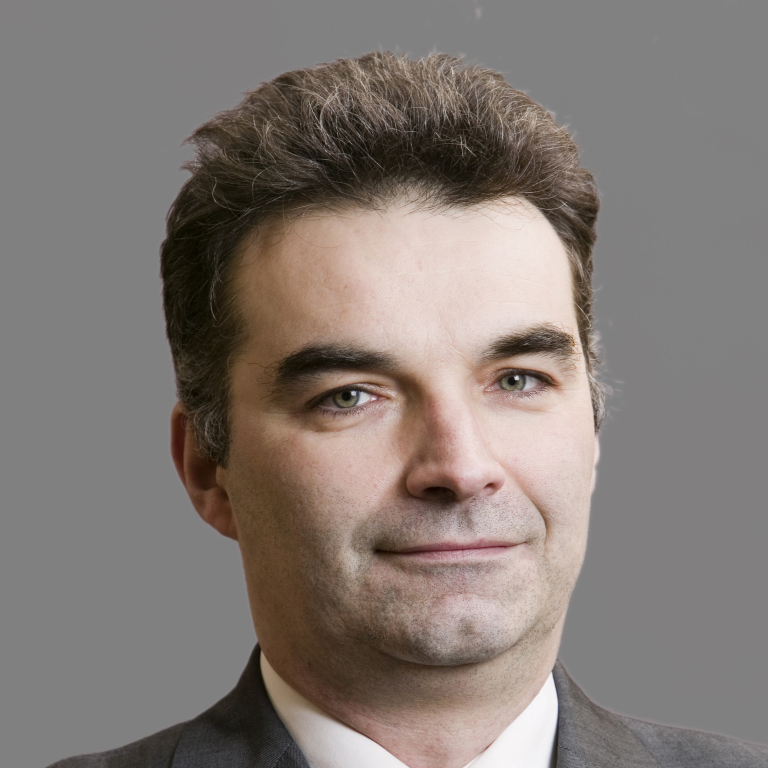
Over many years, Professor Koechlin has combined theory with human neuroimaging to propose a cascade architecture of lateral prefrontal executive control: a posterior-to-anterior hierarchy along the rostro–caudal axis in which successively anterior regions regulate behavior according to stimuli, context, and temporal episodes. This framework established the neural basis of modern research on “hierarchical control.” He subsequently used an information-theoretic approach to characterize how executive functions integrate information across multiple prefrontal subdivisions to achieve unified action selection. In recent work, his team has revealed how the prefrontal cortex integrates reward expectations and beliefs under uncertainty to guide human decision-making.
- Global Collaboration and Academic Ecosystem
Academicians of the World Academy for Artificial Consciousness hail from institutions such as Harvard University, the Massachusetts Institute of Technology, the University of Cambridge, the University of California, the French Academy of Sciences, the University of Padua, the University of Queensland, Columbia University, and the University of Exeter. Honorary Academicians come from a wide range of countries and regions, including the United States, the United Kingdom, France, Germany, Italy, Sweden, Canada, Australia, Spain, and China. In addition, leading scientists from prominent research institutes and technology companies—such as Google, the Allen Institute for Brain Science, and ZEEKR—also participate.
- About WAAC
The World Academy for Artificial Consciousness (https://www.waac.ac/) is a global academic institution established in Paris in 2025. Its mission is to advance frontier research and international collaboration in artificial consciousness through the integration of science, technology, and philosophy. The Academy publishes open research, policy recommendations, evaluation standards, and more. The current President is Academician Yucong Duan, and the Secretary-General is Dr. Yingbo Li. The Honorary Academician List: On May 3, 2025, WAAC released its first batch of Top 100 Honorary Academicians, recognizing scholars who have made foundational or leading contributions to the theory of artificial consciousness.
Read more
Professor Cathy Price of University College London (UCL) has been elected as an academician of the World Academy for Artificial Consciousness (WAAC)
_0.jpg)
We are pleased to announce that Cathy Price, Professor of Cognitive Neuroscience at UCL’s Queen Square Institute of Neurology and a Fellow of the Royal Society, has been elected an academician of the World Academy for Artificial Consciousness (WAAC) for her foundational contributions to the language network and reading mechanisms, the PLORAS framework for predicting post-stroke language recovery, and the neural basis of conscious comprehension.
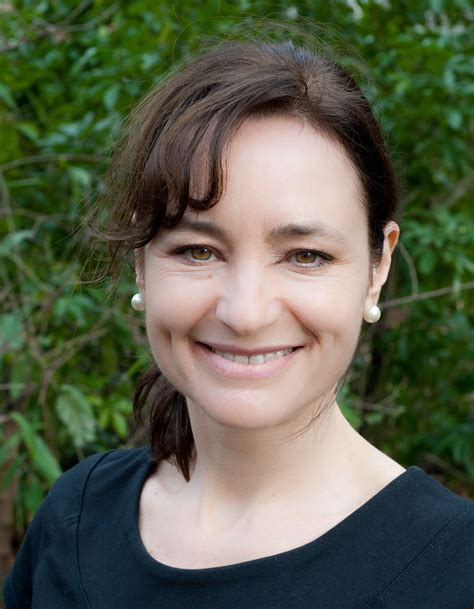
Over many years, Professor Price has used large-sample neuroimaging and clinical datasets to reveal organizational principles of the human brain’s language network, and she founded the PLORAS project, pioneering methods that predict aphasia recovery trajectories from a single structural scan combined with clinical variables. Related reviews and methodological papers have systematically summarized key evidence and challenges—for example, “Predicting Language Outcome and Recovery After Stroke” and “The PLORAS Database.” Her earlier highly cited reviews integrated imaging evidence on speech perception, speech production, and reading, providing a robust foundation for network-based mechanisms of conscious understanding.
- Global Collaboration and Academic Ecosystem
Academicians of the World Academy for Artificial Consciousness hail from institutions such as Harvard University, the Massachusetts Institute of Technology, the University of Cambridge, the University of California, the French Academy of Sciences, the University of Padua, the University of Queensland, Columbia University, and the University of Exeter. Honorary Academicians come from a wide range of countries and regions, including the United States, the United Kingdom, France, Germany, Italy, Sweden, Canada, Australia, Spain, and China. In addition, leading scientists from prominent research institutes and technology companies—such as Google, the Allen Institute for Brain Science, and ZEEKR—also participate.
- About WAAC
The World Academy for Artificial Consciousness (https://www.waac.ac/) is a global academic institution established in Paris in 2025. Its mission is to advance frontier research and international collaboration in artificial consciousness through the integration of science, technology, and philosophy. The Academy publishes open research, policy recommendations, evaluation standards, and more. The current President is Academician Yucong Duan, and the Secretary-General is Dr. Yingbo Li. The Honorary Academician List: On May 3, 2025, WAAC released its first batch of Top 100 Honorary Academicians, recognizing scholars who have made foundational or leading contributions to the theory of artificial consciousness.
Read more